Good morning gardening friends,
In 2008 I began writing Miss Jolie Ann's Kitchen garden. I cannot believe it has been over 10 years! In the early 2000's I was super inspired by the emerging cooking blog movement. I regularly followed blogs such as Smitten Kitchen and 101 Cookbooks. This new internet age of food writing was deliciously exciting to me.
As a passionate cook and kitchen-gardener, from 2008-2014 my blog heavily focused on recipes reflecting my vegetarian whole foods seasonal diet. I loved researching and creating recipes, styling and photographing food, and especially sharing food with my community with hopes of someday writing a cookbook. Many of you attended Second Saturday Supper's with Miss Jolie Ann and trialed my recipes.
Thank you everyone for the many years you supported my recipe and food writing!
In 2015 I left full-time work to start my own business The Gardening Goddess. This blog reflected this shift in my professional life and posts became more about gardening with monthly and seasonal tips focused on organic vegetable and herb gardening.
When I was diagnosed with an autoimmune disease, viral disease, and multiple chronic illnesses in 2016 my blog reflected the healing journey I began.
Since the inception of the blog over a decade ago I have remained a passionate avid cook. However, I began writing less and less about food and recipes when my diet shifted to an omnivore gluten-free dairy-free sugar-free diet within the parameters avoiding my many food intolerances and following multiple healing diet protocols. The sicker I got and the more restricted my diet became the less fun creating recipes and eating became for me. When I was in the worst years of my illnesses the time and energy expended on following strict healing diet protocols was an exhausting chore.
So I choose to really dive into garden writing. I started a monthly garden column in The Concordia News, pitched a gardening book proposal to regional publishers, the proposals were rejected, and I wrote the book anyways! The Gardening Goddess Guide to Edible Gardening in Portland is so close to self-publication I am ecstatic. This summer it will be available at local independent bookstores, garden centers, and nurseries. Book release details are on my website.
In 2015 I launched my professional website www.jolieanndonohue.com and at this time it makes most sense to continue my blog via my website. The Miss Jolie Ann's Kitchen Garden blog will remain live so my readers can search old posts, in particular the wealth of recipes here. Going forward all new blog posts will be available on my website. It is the end of an era and the beginning of another.
Thank you for reading Miss Jolie Ann's Kitchen Garden the past decade!
With Gratitude,
Jolie
Sunday, April 7, 2019

Thursday, March 14, 2019
March 15 Garden Update
Good morning gardeners!
Many of you read my what to plant in the march edible garden post earlier this month. As we are now 2 weeks into March I wanted to offer you an update on my weather predictation and favorability of planting conditions.
We have some sunshine and much warmer temperatures on the way. Over the next 7 days it is looking like daytime highs in the 60s and overnight lows varying from the upper 30's to upper 40's. Over the extended 2-week forecast I see no risk of frost (32 degrees). Remember in frost temperatures seeds won't germinate, potato tubers and onion bulbs will rot in wet soil, and newly planted vegetable starts will suffer.
Our average last frost date is around March 15. Though, we could still have frost as late as April 15. That being said I think these warmer day and night temperatures are now ideal to begin planting your spring garden. Keep in mind we are only planting cool season vegetables March, April, and into the first few weeks of May.
You are holding off on planting all warm season vegetables until mid-May. This means no basil, beans, tomatoes, squash, etc. yet!

Cool Season "Bulk Vegetables" to Plant NOW:
Asparagus-from crowns
Garlic-from cloves
Horseradish-from roots
Jerusalem Artichokes/Sunchokes-from tubers
Potatoes-from certified seed potato tubers
Onions-from bulbs or bunches
Shallots-from cloves
Here are cool season crops to plant in the garden NOW with seed vs transplant preference:
Arugula-seeds
Asian greens-seeds or starts
Collards-seeds or starts
Endive/Escarole-seeds or starts
Florence Fennel-seeds or starts
Kale-seeds or starts
Leeks-starts
Lettuce-seeds or starts
Mesclun Mix-seeds
Mustard Greens-seeds or starts
Peas-seeds or starts
Radicchio-seeds or starts
Radishes-seeds
Salad greens-seeds
Scallions-seeds or starts
Spinach-seeds or starts
Swiss Chard-seeds or starts
Keep in mind if you are planting seeds directly in the garden I'd recommend covering the seed bed with a frost blanket to raise air & soil temperatures to increase germination rate.
Given the warm temperatures forecast this week I'm giving the ok to plant these from starts NOW broccoli, brussels sprouts, cabbage, and cauliflower.
Hold off until April on planting seeds of beets, carrots, celeriac, kohlrabi, parsnips, and turnips. Make sure the soil has warmed up to at least 55 degrees or their seeds won't germinate!
In the herb garden plant NOW cool-loving annual herbs like chervil and cilantro from starts. Biennial parsley is super cold hardy and can be planted now. Start planting NOW hardier annual herbs like chamomile and dill.
All perennial herbs can be planted NOW like chives, lavender, oregano, rosemary, sage, and thyme from transplants.
NOW is the perfect time for planting small fruit and fruit trees in your garden. Last week Jay & I enjoyed a leisurely stroll in the sunshine around Portland Nursery. I was so excited to see so many types of fruit tress now available in espalier form, columnar, dwarf and mini sizes. Lots of fruit trees are now grafted with multiple varieties on one tree. I love this! All perfect for the small space urban garden.
One last reminder...now that I've given you the go-ahead for planting...make sure not only your garden is prepped with compost & fertilizer, but make sure your body is prepped. It has been a long cold sleepy winter. Make sure you stretch before and after gardening, take breaks, and don't overdo it. We can be so excited for spring gardening that we jump in and do it all. Our over exuberance can result in soreness, sprains, and strains. So ease into it my friends.
Happy gardening!
Jolie
The Gardening Goddess
Wellness Through Nature
jolieanndonohue.com

Many of you read my what to plant in the march edible garden post earlier this month. As we are now 2 weeks into March I wanted to offer you an update on my weather predictation and favorability of planting conditions.
We have some sunshine and much warmer temperatures on the way. Over the next 7 days it is looking like daytime highs in the 60s and overnight lows varying from the upper 30's to upper 40's. Over the extended 2-week forecast I see no risk of frost (32 degrees). Remember in frost temperatures seeds won't germinate, potato tubers and onion bulbs will rot in wet soil, and newly planted vegetable starts will suffer.
Our average last frost date is around March 15. Though, we could still have frost as late as April 15. That being said I think these warmer day and night temperatures are now ideal to begin planting your spring garden. Keep in mind we are only planting cool season vegetables March, April, and into the first few weeks of May.
You are holding off on planting all warm season vegetables until mid-May. This means no basil, beans, tomatoes, squash, etc. yet!

Cool Season "Bulk Vegetables" to Plant NOW:
Asparagus-from crowns
Garlic-from cloves
Horseradish-from roots
Jerusalem Artichokes/Sunchokes-from tubers
Potatoes-from certified seed potato tubers
Onions-from bulbs or bunches
Shallots-from cloves
Here are cool season crops to plant in the garden NOW with seed vs transplant preference:
Arugula-seeds
Asian greens-seeds or starts
Collards-seeds or starts
Endive/Escarole-seeds or starts
Florence Fennel-seeds or starts
Kale-seeds or starts
Leeks-starts
Lettuce-seeds or starts
Mesclun Mix-seeds
Mustard Greens-seeds or starts
Peas-seeds or starts
Radicchio-seeds or starts
Radishes-seeds
Salad greens-seeds
Scallions-seeds or starts
Spinach-seeds or starts
Swiss Chard-seeds or starts
Keep in mind if you are planting seeds directly in the garden I'd recommend covering the seed bed with a frost blanket to raise air & soil temperatures to increase germination rate.
Given the warm temperatures forecast this week I'm giving the ok to plant these from starts NOW broccoli, brussels sprouts, cabbage, and cauliflower.
Hold off until April on planting seeds of beets, carrots, celeriac, kohlrabi, parsnips, and turnips. Make sure the soil has warmed up to at least 55 degrees or their seeds won't germinate!
In the herb garden plant NOW cool-loving annual herbs like chervil and cilantro from starts. Biennial parsley is super cold hardy and can be planted now. Start planting NOW hardier annual herbs like chamomile and dill.
All perennial herbs can be planted NOW like chives, lavender, oregano, rosemary, sage, and thyme from transplants.
NOW is the perfect time for planting small fruit and fruit trees in your garden. Last week Jay & I enjoyed a leisurely stroll in the sunshine around Portland Nursery. I was so excited to see so many types of fruit tress now available in espalier form, columnar, dwarf and mini sizes. Lots of fruit trees are now grafted with multiple varieties on one tree. I love this! All perfect for the small space urban garden.
One last reminder...now that I've given you the go-ahead for planting...make sure not only your garden is prepped with compost & fertilizer, but make sure your body is prepped. It has been a long cold sleepy winter. Make sure you stretch before and after gardening, take breaks, and don't overdo it. We can be so excited for spring gardening that we jump in and do it all. Our over exuberance can result in soreness, sprains, and strains. So ease into it my friends.
Happy gardening!
Jolie
The Gardening Goddess
Wellness Through Nature
jolieanndonohue.com

Thursday, March 7, 2019
What To Do In The March Edible Garden
Good morning gardeners!
The first day of spring arrives on the equinox March 20th. Perhaps you've already seen bright crocus and daffodils bravely poking up from the freezing soil. The earth is awakening and so is our persistent gardening urge. Seed catalogs in hand you are ready to start planting your vegetables and herbs! To be most successful in your vegetable garden keep in mind a few guidelines.
According to the Farmer's Almanac weather folklore sayings are as colorful as the imagination. When March weather is in like a lion it is out like a lamb. Relying on this weather proverb is as unpredictable as our wild March weather.
I write to you on March 7 and can you believe it that we had snow in Portland yesterday? As I write there is still a 40% chance of more snow today. That certainly would describe in like a lion! I usually say March is highly unpredictable with sunny days, chilly days, frost, rain, hail, sleet, and wind. And apparently this year we also have snow in March!
Here's our new garden space lightly dusted in snow on March 6

On average our March high is 56 and average low is 41 with 14 days of rain.
Historically our average last frost in Portland was April 15th, however, in recent years it has shifted to March 15th. Remember frost is 32 degrees and light frost is 36 degrees. For optimal planting conditions not only do day temperatures need to rise, the soil needs to warm, and dry out some. In wet cold soil potato tubers will rot, seeds won’t germinate and transplants will struggle to grow. As March proceeds into April we generally have more ideal planting conditions.
In the past couple of years we have got a jump start on edible gardening early in March due to warmer than average temperatures. This year I'm not so sure. When I look at the extended forecast for now through March 15 I see daytimes in the low 40s to mid 50s and nighttimes in the upper 20s to upper 30s. I think it is hard to say how late we will see our last frost. One thing is for certain, it is still way too cold for planting in the edible garden. I would wait until at least March 15th to assess temperatures and planting.
In March think cool season crops. It is way to early for summer heat lovers like tomatoes, cucumbers, squash, basil, etc--you will plant these crops after May 15th.
Working in wet gardens causes soil compaction that impacts plant health. In prior years, I’ve had my raised beds "lasagna mulched," planted with crimson clover, and covered with a frost blanket that is keeping the soil warm and drier through the rainy season. In early March I typically will prepare my raised beds by removing the frost blanket, hoeing the fall-planted crimson clover cover crop, leaving greens on soil, sprinkling on an organic granular fertilizer, adding a fresh layer of compost, and then replacing the frost blankets. By mid-end of March when I assess the weather the raised beds will be prepped and ready for planting.
As many of you know my husband Jay and I were given a no-cause eviction to move out of our beloved rental house and garden of 8 years. So this spring is looking dramatically different for us in the edible garden.
Here are the 200 plants we potted and dug from our old garden in January to move with us. Here they are patiently sitting in their new home awaiting transplanting

We have so many garden projects to prepare for planting we will not be planting anything in March. After weeding, raking, clean-up, filling our raised bed we moved with us, and shifting around our 200 potted plants in March we should hopefully be ready by April for planting vegetables and herbs. A brand new garden is daunting on its own, but given the frequent snow, ice, and chilly temperatures the situation becomes overly complicated and delayed.
Here's our new garden space with the one raised bed we moved with us. As you can see there's lots of clean up and prep to be completed before any planting can happen
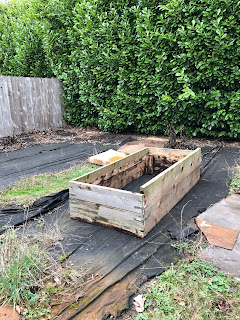
I look forward to sharing with you more photos and stories of our new gardening adventure as it progresses this spring!
Cool Season "Bulk Vegetables" to Plant after March 15:
Asparagus-from crowns
Garlic-from cloves
Horseradish-from roots
Jerusalem Artichokes/Sunchokes-from tubers
Potatoes-from certified seed potato tubers
Onions-from bulbs or bunches
Shallots-from cloves
Here are cool season crops to plant in the garden after March 15 with seed vs transplant preference:
Arugula-seeds
Asian greens-seeds or starts
Collards-seeds or starts
Endive/Escarole-seeds or starts
Florence Fennel-seeds or starts
Kale-seeds or starts
Leeks-starts
Lettuce-seeds or starts
Mesclun Mix-seeds
Mustard Greens-seeds or starts
Peas-seeds or starts
Radicchio-seeds or starts
Radishes-seeds
Salad greens-seeds
Scallions-seeds or starts
Spinach-seeds or starts
Swiss Chard-seeds or starts
Keep in mind if you are planting seeds directly in the garden I'd recommend covering the seed bed with a frost blanket to raise air & soil temperatures to increase germination rate.
I would wait a little later in March to see how the weather goes for planting: broccoli, brussels sprouts, cabbage, and cauliflower. Or if you want to plant these now from transplants into the garden be sure to keep a warming frost blanket handy or use some other kind of protection from a cloche, cold frame or low tunnel.
Hold off until April on planting seeds of beets, carrots, celeriac, kohlrabi, parsnips, and turnips. Make sure the soil has warmed up to at least 55 degrees or their seeds won't germinate!
Mid-March is usually a great time to get started with your herb garden. Cool-loving annual herbs like chervil and cilantro can be planted Mid-March from seed or transplants. Biennial parsley is super cold hardy and can be planted now. Start planting hardier annual herbs like chamomile and dill later in March.
Additionally perennial herbs like chives, lavender, oregano, rosemary, sage, and thyme can all be planted from transplants in March. This month is an excellent time to divide and transplant perennial herbs grown in containers like chives, lemon balm, lovage, and mint.
Late winter into early spring is the ideal time to plant small fruit and fruit trees in your garden. This time of year you will also get the best selection at nurseries. Consider planting a dwarf or columnar fruit tree such as apple, Asian pear, pear, cherry, or plum which all grow excellent in Portland. Fruiting shrubs, canes, and vines include:
Blackberries
Blueberries
Currants
Grapes
Hops
Kiwi
Raspberries
And don’t forget the strawberries!
In spite of the chilly beginning to March, spring really is right around the corner. A great garden always starts with a great garden plan. Please let me know if you have any questions. I look forward to seeing you in an upcoming gardening class or in person garden consultation. Don't miss any blog posts, class information, and book release updates by subscribing to my email newsletter via my website.
Happy Gardening,
Jolie
www.jolieanndonohue.com
Healing People, Communities, and the Planet One Garden at at Time

The first day of spring arrives on the equinox March 20th. Perhaps you've already seen bright crocus and daffodils bravely poking up from the freezing soil. The earth is awakening and so is our persistent gardening urge. Seed catalogs in hand you are ready to start planting your vegetables and herbs! To be most successful in your vegetable garden keep in mind a few guidelines.
According to the Farmer's Almanac weather folklore sayings are as colorful as the imagination. When March weather is in like a lion it is out like a lamb. Relying on this weather proverb is as unpredictable as our wild March weather.
I write to you on March 7 and can you believe it that we had snow in Portland yesterday? As I write there is still a 40% chance of more snow today. That certainly would describe in like a lion! I usually say March is highly unpredictable with sunny days, chilly days, frost, rain, hail, sleet, and wind. And apparently this year we also have snow in March!
Here's our new garden space lightly dusted in snow on March 6

On average our March high is 56 and average low is 41 with 14 days of rain.
Historically our average last frost in Portland was April 15th, however, in recent years it has shifted to March 15th. Remember frost is 32 degrees and light frost is 36 degrees. For optimal planting conditions not only do day temperatures need to rise, the soil needs to warm, and dry out some. In wet cold soil potato tubers will rot, seeds won’t germinate and transplants will struggle to grow. As March proceeds into April we generally have more ideal planting conditions.
In the past couple of years we have got a jump start on edible gardening early in March due to warmer than average temperatures. This year I'm not so sure. When I look at the extended forecast for now through March 15 I see daytimes in the low 40s to mid 50s and nighttimes in the upper 20s to upper 30s. I think it is hard to say how late we will see our last frost. One thing is for certain, it is still way too cold for planting in the edible garden. I would wait until at least March 15th to assess temperatures and planting.
In March think cool season crops. It is way to early for summer heat lovers like tomatoes, cucumbers, squash, basil, etc--you will plant these crops after May 15th.
Working in wet gardens causes soil compaction that impacts plant health. In prior years, I’ve had my raised beds "lasagna mulched," planted with crimson clover, and covered with a frost blanket that is keeping the soil warm and drier through the rainy season. In early March I typically will prepare my raised beds by removing the frost blanket, hoeing the fall-planted crimson clover cover crop, leaving greens on soil, sprinkling on an organic granular fertilizer, adding a fresh layer of compost, and then replacing the frost blankets. By mid-end of March when I assess the weather the raised beds will be prepped and ready for planting.
As many of you know my husband Jay and I were given a no-cause eviction to move out of our beloved rental house and garden of 8 years. So this spring is looking dramatically different for us in the edible garden.
Here are the 200 plants we potted and dug from our old garden in January to move with us. Here they are patiently sitting in their new home awaiting transplanting

We have so many garden projects to prepare for planting we will not be planting anything in March. After weeding, raking, clean-up, filling our raised bed we moved with us, and shifting around our 200 potted plants in March we should hopefully be ready by April for planting vegetables and herbs. A brand new garden is daunting on its own, but given the frequent snow, ice, and chilly temperatures the situation becomes overly complicated and delayed.
Here's our new garden space with the one raised bed we moved with us. As you can see there's lots of clean up and prep to be completed before any planting can happen

I look forward to sharing with you more photos and stories of our new gardening adventure as it progresses this spring!
Cool Season "Bulk Vegetables" to Plant after March 15:
Asparagus-from crowns
Garlic-from cloves
Horseradish-from roots
Jerusalem Artichokes/Sunchokes-from tubers
Potatoes-from certified seed potato tubers
Onions-from bulbs or bunches
Shallots-from cloves
Here are cool season crops to plant in the garden after March 15 with seed vs transplant preference:
Arugula-seeds
Asian greens-seeds or starts
Collards-seeds or starts
Endive/Escarole-seeds or starts
Florence Fennel-seeds or starts
Kale-seeds or starts
Leeks-starts
Lettuce-seeds or starts
Mesclun Mix-seeds
Mustard Greens-seeds or starts
Peas-seeds or starts
Radicchio-seeds or starts
Radishes-seeds
Salad greens-seeds
Scallions-seeds or starts
Spinach-seeds or starts
Swiss Chard-seeds or starts
Keep in mind if you are planting seeds directly in the garden I'd recommend covering the seed bed with a frost blanket to raise air & soil temperatures to increase germination rate.
I would wait a little later in March to see how the weather goes for planting: broccoli, brussels sprouts, cabbage, and cauliflower. Or if you want to plant these now from transplants into the garden be sure to keep a warming frost blanket handy or use some other kind of protection from a cloche, cold frame or low tunnel.
Hold off until April on planting seeds of beets, carrots, celeriac, kohlrabi, parsnips, and turnips. Make sure the soil has warmed up to at least 55 degrees or their seeds won't germinate!
Mid-March is usually a great time to get started with your herb garden. Cool-loving annual herbs like chervil and cilantro can be planted Mid-March from seed or transplants. Biennial parsley is super cold hardy and can be planted now. Start planting hardier annual herbs like chamomile and dill later in March.
Additionally perennial herbs like chives, lavender, oregano, rosemary, sage, and thyme can all be planted from transplants in March. This month is an excellent time to divide and transplant perennial herbs grown in containers like chives, lemon balm, lovage, and mint.
Late winter into early spring is the ideal time to plant small fruit and fruit trees in your garden. This time of year you will also get the best selection at nurseries. Consider planting a dwarf or columnar fruit tree such as apple, Asian pear, pear, cherry, or plum which all grow excellent in Portland. Fruiting shrubs, canes, and vines include:
Blackberries
Blueberries
Currants
Grapes
Hops
Kiwi
Raspberries
And don’t forget the strawberries!
In spite of the chilly beginning to March, spring really is right around the corner. A great garden always starts with a great garden plan. Please let me know if you have any questions. I look forward to seeing you in an upcoming gardening class or in person garden consultation. Don't miss any blog posts, class information, and book release updates by subscribing to my email newsletter via my website.
Happy Gardening,
Jolie
www.jolieanndonohue.com
Healing People, Communities, and the Planet One Garden at at Time

Thursday, February 14, 2019
What to do in the February Garden
Happy Valentine's Day gardening friends,
As I write to you from my new home, outside it is rainy, gray, and in the 30's with windchill in the 20's. Last week we saw a little snow and ice. A pretty typical February by Portland standards. We did not receive any frost in the end of 2018. Our first frost finally arriving very late on January 1st. I was so grateful we were moved before any snow or ice hit.
I have noticed crocus, snow drops, cyclamen blooming and even a few daffodil shoots springing up. My hellebores and winter daphne were all in magnificent bloom in January as Jay and I dug and transplanted close to 200 plants to transport to our new home at the beginning of February. What a unexpected whirlwind my 2019 has been so far! I am reminded of the saying "Change is the only thing certain in life."
During cold, wet, windy winter weather we aren't usually thinking about gardening yet. However, all those seed catalogs sure are tempting, aren't they?
February continues to be a great month for preparing and planning versus planting. Take a gardening class with me, read a gardening book, and draft your planting plan so you are prepared when spring planting finally arrives.
I'm very excited to announce my first book The Gardening Goddess Guide to Edible Gardening in Portland will be published next month. Stay tuned via my email newsletter for full book release and event information.
Historically in Portland our average last frost date was April 15. Climate change has influenced our frost dates, and now our average last frost date is March 15. A light frost happens at 36 degrees, frost is 32 degrees, and a hard freeze occurs at 24 degrees. Most vegetable plants will not tolerate a light frost at the beginning of their growing season. Though, some cool season vegetables like brussels sprouts, kale, and parsnips taste better when fall harvested after a frost.
Cool season veggies are those planted in the early spring and thrive in the cooler temperatures before summer arrives. Some of the vegetables & herbs we will consider planting later in March are:
Asian greens
Broccoli
Cabbage
Cauliflower
Chervil
Cilantro
Collards
Kale
Lettuce
Mustard greens
Peas
Radishes
Salad greens
Spinach
Swiss chard
Turnips
In March asparagus crowns, potato tubers, garlic bulbs, onion sets and bunches show up at nurseries. Joining them are perennial horseradish, sunchockes/jerusalem artichokes, and rhubarb. We can begin planting these in March when the weather is favorable.
As for February, it is a great time to assess your tools and supplies for the season. Twine, bamboo stakes, tomato cages, and fertilizer should be inventoried and purchased. Give your tools a good cleaning and take them in for sharpening. Make a garden plan and purchase seeds for the season. Remember to support seed companies who have signed the safe seed pledge. Always purchase organic and non-GMO seeds. Consider the diversity of heirlooms and the successfulness of regionally specific varieties. I purchase seeds from: territorial seed company, renee's garden, botanical interest, and seed saver's exchange. Purchase lily bulbs and dahlia tubers. I am a big fan of ordering from PNW nurseries: B&D lilies, Old House Dahlias, and Swan Island Dahlias.
Head out to the nursery to purchase cheerful potted daffodils, tulips, and hyacinth. Colorful cool season annual primrose, pansy, viola, and cyclamen brighten up front porch containers. Perennial hellebores are blooming in full glory at nurseries in February. At the florist pick up a pussy willow wreath and blooming branches. I adore my annual late winter/early spring ritual of weekly rotating forsythia, pussy willow, magnolia, cherry, and quince branches.
February is excellent timing for purchasing and planting fruit canes, bushes, vines, and trees. My insider tip is you will get the best selection at local nurseries at this time of year and the cool weather is perfect for planting fruit.
Trees: apple, pear, plum, peach, cherry
Bushes: blueberry, currant, huckleberry, gooseberry
Canes: raspberries, blackberries, marionberries
Vines: kiwi, grape
Don't forget the strawberries!!
I have many exciting, fun, and practical gardening workshops lined up this spring, starting this Saturday! Please join me.
Now is the time to schedule an in-person edible gardening consultation at your home. I love coming out and seeing your gardens-both big & small and helping you create a plan for your most successful, healthy, and abundant edible garden. Its like your own personalized gardening class in your own home with The Gardening Goddess. Schedule now before my March is fully booked!
If you are dreaming of a garden that also includes ornamental plants and don't know where to start I now offer multiple tiers of garden consultation and design. There is a level of service and price point for everyone's budget. Please check out my newly revised website for more information.
I look forward to hearing from you soon and sharing the magic of spring gardening that is right around the corner.
Happy gardening,
Jolie
As I write to you from my new home, outside it is rainy, gray, and in the 30's with windchill in the 20's. Last week we saw a little snow and ice. A pretty typical February by Portland standards. We did not receive any frost in the end of 2018. Our first frost finally arriving very late on January 1st. I was so grateful we were moved before any snow or ice hit.
I have noticed crocus, snow drops, cyclamen blooming and even a few daffodil shoots springing up. My hellebores and winter daphne were all in magnificent bloom in January as Jay and I dug and transplanted close to 200 plants to transport to our new home at the beginning of February. What a unexpected whirlwind my 2019 has been so far! I am reminded of the saying "Change is the only thing certain in life."
During cold, wet, windy winter weather we aren't usually thinking about gardening yet. However, all those seed catalogs sure are tempting, aren't they?
February continues to be a great month for preparing and planning versus planting. Take a gardening class with me, read a gardening book, and draft your planting plan so you are prepared when spring planting finally arrives.
I'm very excited to announce my first book The Gardening Goddess Guide to Edible Gardening in Portland will be published next month. Stay tuned via my email newsletter for full book release and event information.
Historically in Portland our average last frost date was April 15. Climate change has influenced our frost dates, and now our average last frost date is March 15. A light frost happens at 36 degrees, frost is 32 degrees, and a hard freeze occurs at 24 degrees. Most vegetable plants will not tolerate a light frost at the beginning of their growing season. Though, some cool season vegetables like brussels sprouts, kale, and parsnips taste better when fall harvested after a frost.
Cool season veggies are those planted in the early spring and thrive in the cooler temperatures before summer arrives. Some of the vegetables & herbs we will consider planting later in March are:
Asian greens
Broccoli
Cabbage
Cauliflower
Chervil
Cilantro
Collards
Kale
Lettuce
Mustard greens
Peas
Radishes
Salad greens
Spinach
Swiss chard
Turnips
In March asparagus crowns, potato tubers, garlic bulbs, onion sets and bunches show up at nurseries. Joining them are perennial horseradish, sunchockes/jerusalem artichokes, and rhubarb. We can begin planting these in March when the weather is favorable.
As for February, it is a great time to assess your tools and supplies for the season. Twine, bamboo stakes, tomato cages, and fertilizer should be inventoried and purchased. Give your tools a good cleaning and take them in for sharpening. Make a garden plan and purchase seeds for the season. Remember to support seed companies who have signed the safe seed pledge. Always purchase organic and non-GMO seeds. Consider the diversity of heirlooms and the successfulness of regionally specific varieties. I purchase seeds from: territorial seed company, renee's garden, botanical interest, and seed saver's exchange. Purchase lily bulbs and dahlia tubers. I am a big fan of ordering from PNW nurseries: B&D lilies, Old House Dahlias, and Swan Island Dahlias.
Head out to the nursery to purchase cheerful potted daffodils, tulips, and hyacinth. Colorful cool season annual primrose, pansy, viola, and cyclamen brighten up front porch containers. Perennial hellebores are blooming in full glory at nurseries in February. At the florist pick up a pussy willow wreath and blooming branches. I adore my annual late winter/early spring ritual of weekly rotating forsythia, pussy willow, magnolia, cherry, and quince branches.
February is excellent timing for purchasing and planting fruit canes, bushes, vines, and trees. My insider tip is you will get the best selection at local nurseries at this time of year and the cool weather is perfect for planting fruit.
Trees: apple, pear, plum, peach, cherry
Bushes: blueberry, currant, huckleberry, gooseberry
Canes: raspberries, blackberries, marionberries
Vines: kiwi, grape
Don't forget the strawberries!!
I have many exciting, fun, and practical gardening workshops lined up this spring, starting this Saturday! Please join me.
Now is the time to schedule an in-person edible gardening consultation at your home. I love coming out and seeing your gardens-both big & small and helping you create a plan for your most successful, healthy, and abundant edible garden. Its like your own personalized gardening class in your own home with The Gardening Goddess. Schedule now before my March is fully booked!
If you are dreaming of a garden that also includes ornamental plants and don't know where to start I now offer multiple tiers of garden consultation and design. There is a level of service and price point for everyone's budget. Please check out my newly revised website for more information.
I look forward to hearing from you soon and sharing the magic of spring gardening that is right around the corner.
Happy gardening,
Jolie
Thursday, December 27, 2018
The Winter Garden & Happy New Year!
Good morning gardening friends,
The 2018 year is nearing the end and like most years it was filled with both the lovely and the challenging. As demonstrated in nature, life is after all a dance of balance. Thank you for sharing the gardening year with me by attending my classes, reading my blog, subscribing to my newsletter, and hiring me for your garden design and consultations.
And, wow, the last month of 2018 triumphantly concludes with a prosperous bang of handmade wreath sales, wreath making classes, and wreath making private parties. I am grateful for the many ways you all have supported my small business and the work I am truly passionate about. Thank you for sharing the gardening life with me!
For me January marks the beginning of "garden dreaming." During the cold, wet, and sometimes frozen winter months of January and February I am pouring over seed catalogs and itching to get outside into the garden. However, this start to winter doesn't really feel like a Portland winter to me. Autumn was truly magnificent with the range of exquisite colors bursting from trees and shrubs. Due to the almost complete lack of rain I was able to enjoy daily walks in nature. The unfortunate trade-off is that most of Oregon remains in a severe drought. This morning I observed Multnomah County was downgraded from a severe to moderate drought.
And as the winter begins and the year draws to a close, we have yet to have our first frost in Portland. The closest we've got is a light frost with a low temperature hovering around 34-36 degrees. Frost occurs at 32 degrees. For as long as I could remember our average first frost in Portland was October 15. A few years ago I noticed the disturbing pattern of frost not arriving until later in November and December. Upon research I noted several online sources now citing Portland's average first frost date anywhere between November 15-December 15. Well folks, it hasn't happened yet this year. When it finally arrives, I wager we've broken a record for latest frost date.
Due to this late warm weather I was harvesting lettuce through Thanksgiving. Several of my summer annuals are still blooming: cup and saucer vine, fuchsia, geranium, nasturtium, and purple bell vine. Typically a hard frost would have killed down my pineapple sage in December. It is still in glorious stunning red bloom, happily feeding our resident hummingbirds.
Maybe you have noticed these sometimes subtle, sometimes dramatic shifts in our seasons and climate. Without "catastrophizing," I must say it does concern me quite a bit. As we transition into a new year and a time of making resolutions, perhaps as gardeners and stewards of our mother earth we can consider new ways to reduce our impact on the planet.
Usually at this time of year I begin writing about seasonal affective disorder, an inevitable side effect of living in the rainy Pacific Northwest. Sometimes we gardeners humorously like to call it seed acquisition disorder. A few years ago, a funny drawing by Joseph Tychonievich of Green Sparrow Gardens was floating around the Internet. He says, "The short dark winter days cause me to suffer from S.A.D.--Seed Acquisition Disorder.”
Portland gardening friends, I’m sure you can all relate to this! Maybe not so much this autumn and start of winter when the weather remains so mild and sunny. I think back especially to the winter of 2015-2016 when it rained so much enormous trees toppled over because their roots were no longer stable in the constantly saturated soil. And the winter of 2016-2017 when we had four snow/ice events by the second week of January.
After the autumn leaf raking frenzy and during the intensity of the holiday season we are mostly happy to have a respite from our gardens. At the beginning of every year the new seed catalogs arrive in my mailbox. In fact, in December I've already received catalogs from Seed Saver's Exchange and Baker Creek Heirloom Seeds. I spend hours excitedly pouring over each catalog, wrapped in a blanket, drinking pots of my favorite tea and devouring every detail of the new and old favorite varieties of vegetables, herbs, and flowers.
Most years, come January and February I find myself in pajamas and rain boots, clipboard in hand patrolling my puddle-filled, mostly dormant garden. I gaze at the lush fall-sown cover crops and I ponder what worked and didn't work last year. List after list of garden plans are creatively drafted. Dreaming and fantasizing about peonies, dahlias, sunflowers, and lilies I mark up my seed catalogs and make online wish lists. I eat, drink, breath all the endless potential and promise my garden holds in the coming year. My unchecked gardening enthusiasm for heirlooms can also promise the emptying of my bank account if I do not practice some restraint.
Heirloom seeds offer a diversity of old-fashioned quality, and are rich in taste, color and history. Heirlooms are commonly defined as open-pollinated varieties that have resulted from natural selection rather than a controlled hybridization process and were grown prior to 1950. Some of my favorite sources for heirloom seeds for the Portland area gardener are Seed Savers Exchange, Baker Creek Heirloom, Botanical Interest and Renee’s Garden.
Territorial Seed Company is a family-owned company in Oregon since 1979. Check out their selection of seeds, some organic and heirloom.
When purchasing seeds you will see many terms like heirloom, cultivar, GE, GMO, open pollinated, hybrid, organic and treated. All of these can be confusing and are often misinterpreted by the gardener consumer. I found a handy online resource from Renee’s Garden called Seed Buying 101: A Seed Gardener’s Glossary.
If you are concerned about GMOs, signers of the safe seed pledge do not knowingly buy or sell genetically engineered seeds. A list of companies that have signed the pledge is maintained by the Council for Responsible Genetics, a non-profit with a stated mission of educating the public about and advocating for socially responsible use of new genetic technologies.
With so many seed choices, where does a gardener begin? First, make a list of all the things you are interested in growing, their growth habits and size at maturity. Take measurements of your garden and draw out where you might place things. You are invited to join me for organic gardening classes in February and March. Or schedule an in-person or email gardening consultation appointment.
Winter is the perfect season to explore gardening books like The Maritime Northwest Garden Guide, one of my all-time favorites. My fantastic news is my very first gardening book will be released this spring! I cannot wait to share it with you.
Please also join me for a gardening class or workshop this winter/spring. I am continuing my always popular workshops at Portland Nursery, exciting new and updated classes at Portland Community College, and I'm happy to announce I will now offer gardening classes at Mt Hood Community College. Please visit my website for dates and registration information.
Enjoy every moment of the garden dreaming season before the hard work of spring begins. From my home and garden to yours I wish you a beautiful new year!
Happy Gardening,
Jolie
The 2018 year is nearing the end and like most years it was filled with both the lovely and the challenging. As demonstrated in nature, life is after all a dance of balance. Thank you for sharing the gardening year with me by attending my classes, reading my blog, subscribing to my newsletter, and hiring me for your garden design and consultations.
And, wow, the last month of 2018 triumphantly concludes with a prosperous bang of handmade wreath sales, wreath making classes, and wreath making private parties. I am grateful for the many ways you all have supported my small business and the work I am truly passionate about. Thank you for sharing the gardening life with me!
For me January marks the beginning of "garden dreaming." During the cold, wet, and sometimes frozen winter months of January and February I am pouring over seed catalogs and itching to get outside into the garden. However, this start to winter doesn't really feel like a Portland winter to me. Autumn was truly magnificent with the range of exquisite colors bursting from trees and shrubs. Due to the almost complete lack of rain I was able to enjoy daily walks in nature. The unfortunate trade-off is that most of Oregon remains in a severe drought. This morning I observed Multnomah County was downgraded from a severe to moderate drought.
And as the winter begins and the year draws to a close, we have yet to have our first frost in Portland. The closest we've got is a light frost with a low temperature hovering around 34-36 degrees. Frost occurs at 32 degrees. For as long as I could remember our average first frost in Portland was October 15. A few years ago I noticed the disturbing pattern of frost not arriving until later in November and December. Upon research I noted several online sources now citing Portland's average first frost date anywhere between November 15-December 15. Well folks, it hasn't happened yet this year. When it finally arrives, I wager we've broken a record for latest frost date.
Due to this late warm weather I was harvesting lettuce through Thanksgiving. Several of my summer annuals are still blooming: cup and saucer vine, fuchsia, geranium, nasturtium, and purple bell vine. Typically a hard frost would have killed down my pineapple sage in December. It is still in glorious stunning red bloom, happily feeding our resident hummingbirds.
Maybe you have noticed these sometimes subtle, sometimes dramatic shifts in our seasons and climate. Without "catastrophizing," I must say it does concern me quite a bit. As we transition into a new year and a time of making resolutions, perhaps as gardeners and stewards of our mother earth we can consider new ways to reduce our impact on the planet.
Usually at this time of year I begin writing about seasonal affective disorder, an inevitable side effect of living in the rainy Pacific Northwest. Sometimes we gardeners humorously like to call it seed acquisition disorder. A few years ago, a funny drawing by Joseph Tychonievich of Green Sparrow Gardens was floating around the Internet. He says, "The short dark winter days cause me to suffer from S.A.D.--Seed Acquisition Disorder.”
Portland gardening friends, I’m sure you can all relate to this! Maybe not so much this autumn and start of winter when the weather remains so mild and sunny. I think back especially to the winter of 2015-2016 when it rained so much enormous trees toppled over because their roots were no longer stable in the constantly saturated soil. And the winter of 2016-2017 when we had four snow/ice events by the second week of January.
After the autumn leaf raking frenzy and during the intensity of the holiday season we are mostly happy to have a respite from our gardens. At the beginning of every year the new seed catalogs arrive in my mailbox. In fact, in December I've already received catalogs from Seed Saver's Exchange and Baker Creek Heirloom Seeds. I spend hours excitedly pouring over each catalog, wrapped in a blanket, drinking pots of my favorite tea and devouring every detail of the new and old favorite varieties of vegetables, herbs, and flowers.
Most years, come January and February I find myself in pajamas and rain boots, clipboard in hand patrolling my puddle-filled, mostly dormant garden. I gaze at the lush fall-sown cover crops and I ponder what worked and didn't work last year. List after list of garden plans are creatively drafted. Dreaming and fantasizing about peonies, dahlias, sunflowers, and lilies I mark up my seed catalogs and make online wish lists. I eat, drink, breath all the endless potential and promise my garden holds in the coming year. My unchecked gardening enthusiasm for heirlooms can also promise the emptying of my bank account if I do not practice some restraint.
Heirloom seeds offer a diversity of old-fashioned quality, and are rich in taste, color and history. Heirlooms are commonly defined as open-pollinated varieties that have resulted from natural selection rather than a controlled hybridization process and were grown prior to 1950. Some of my favorite sources for heirloom seeds for the Portland area gardener are Seed Savers Exchange, Baker Creek Heirloom, Botanical Interest and Renee’s Garden.
Territorial Seed Company is a family-owned company in Oregon since 1979. Check out their selection of seeds, some organic and heirloom.
When purchasing seeds you will see many terms like heirloom, cultivar, GE, GMO, open pollinated, hybrid, organic and treated. All of these can be confusing and are often misinterpreted by the gardener consumer. I found a handy online resource from Renee’s Garden called Seed Buying 101: A Seed Gardener’s Glossary.
If you are concerned about GMOs, signers of the safe seed pledge do not knowingly buy or sell genetically engineered seeds. A list of companies that have signed the pledge is maintained by the Council for Responsible Genetics, a non-profit with a stated mission of educating the public about and advocating for socially responsible use of new genetic technologies.
With so many seed choices, where does a gardener begin? First, make a list of all the things you are interested in growing, their growth habits and size at maturity. Take measurements of your garden and draw out where you might place things. You are invited to join me for organic gardening classes in February and March. Or schedule an in-person or email gardening consultation appointment.
Winter is the perfect season to explore gardening books like The Maritime Northwest Garden Guide, one of my all-time favorites. My fantastic news is my very first gardening book will be released this spring! I cannot wait to share it with you.
Please also join me for a gardening class or workshop this winter/spring. I am continuing my always popular workshops at Portland Nursery, exciting new and updated classes at Portland Community College, and I'm happy to announce I will now offer gardening classes at Mt Hood Community College. Please visit my website for dates and registration information.
Enjoy every moment of the garden dreaming season before the hard work of spring begins. From my home and garden to yours I wish you a beautiful new year!
Happy Gardening,
Jolie
Monday, October 1, 2018
What to Plant in the October Garden
Greetings gardening friends!
I hope the first month of autumn finds you happy and healthy. Our autumn has begun with brilliant sunny days in the 80s, thunderstorms, fog, and cool nights in the low 50s. In my experience October is a mild month with plenty of opportunity to garden and be out walking and hiking in nature. According to the NOAA in October on average we receive 9 days of rain with an average high/low temperature of 63/48 degrees.
Depending on what source you look at our average first frost date is anywhere from October 15-December 15. During the past few years I've observed our first frost to arrive later in that range around November 15. That's bad news for climate change and good news for gardeners and extends our growing season just a little bit longer.
Did you know that in Portland, autumn is considered our second planting season for the ornamental garden? This is a spectacular season for planting trees, shrubs, perennials, ornamental grasses, ferns, ground covers, and native plants. By planting in autumn root systems get a jump start before the cold winter weather makes them dormant. Then in the spring they grow faster than those spring-planted. Additional bonus the fall, winter, and spring rainy season cares for your new plants without the chore of supplemental watering.

October is an excellent time for:
-Cleaning up and putting to rest the edible garden--raised beds, in-ground, and containers
-Planting cover crops
-Planting garlic & shallots
-Pruning lavender
-Planting all kinds of perennial herbs
-Dividing and transplanting existing mature perennial herbs
-Raking leaves and making a leaf mulch pile
-Planting spring flowering bulbs in the ornamental garden
-Plant cool season ornamental containers

CLEAN UP: Now is the time of year I put my edible garden "to rest" for the winter. As I garden intensively in and rotate three raised beds I don't garden year-round, but take the fall and winter off to rest and replenish the garden soil. In late September into early October I harvest the last of my summer crops like tomatoes, zucchini, cucumbers, and beans. I put any plant debris infected with powdery mildew or any other disease or pest problem in the curbside yard debris bin instead of my home compost bin.
Once the raised beds are cleaned up I like to top dress their soil with finished or almost finished compost from my home bin. By emptying my home compost bin in the autumn I can start a fresh pile over the winter that should be ready in time for late spring planting. I cover the raised beds with a frost blanket pinned down. The frost blanket will keep out the marauding squirrels from burying their nuts and the neighborhood cats seeking a new litter box.
Any vegetables, annual herbs and flowers I grow in containers I also empty out at this time of year. I just add the potting soil and plant debris right into my cleaned up raised beds. As I clean up the raised beds I remove tomato cages, bamboo stakes, and trellis to store for the winter.
You can also plant your raised beds or in ground edible garden with cover crops through the month of October. Find more information here.

GARLIC & SHALLOTS: October is the time to plant garlic and shallot bulbs in the Portland garden for a harvest next summer. Pick up some garlic and shallots from your local nursery soon for best selection. By planting garlic and shallots in the fall they start to grow, then sit dormant during the winter, and spring to life again in early spring. The overwintering process assures superior growth, flavor, and much higher yields than spring planting.
Garlic is available in softneck and hardneck varieties. Softneck varieties are less spicy, store well, and have a braidable stem. Hardneck varieties have a spicier flavor, have larger cloves, and develop gorgeous flowering "scapes" in the spring.
Shallots are small clustered onions with deeper flavor than regular onions. They are highly valued by gourmet chefs and can easily be grown in the home garden.
We usually plant one variety each of hardneck and softneck garlic, as well as lots of shallots. This is a fun October planting project when there is not a lot else to be planted!

LAVENDER: Did you know October is the perfect time to prune your lavender? Cut the entire plant back by one third this month. This annual pruning will keep your lavender plant's structure in better shape.
SPRING FLOWERING BULBS: October is the time to plant spring flowering bulbs like daffodil, tulip, anemone, rununculus, crocus, hyacith, grape hyacinth, ornamental allium, miniature iris, snowdrops, and checkered lily.
Did you know you can also fall plant perennial lilies like tiger, asiatic, and oriental?
I like to tuck spring-flowering bulbs into the containers on my deck that currently are loaded with fall season annual plants.
Shop your local nursery now for best selection and get planting while we still have the beautiful sunshine. Remember not to plant in the wet soil on rainy days as this causes soil compaction.

FALL CONTAINERS: I am not ashamed to admit I am obsessed with fall color. Fall color is a category of plants in nurseries and garden centers that begins appearing in September. Fall color is typically cool season annual plants meant to replace fading summer annuals as temperatures cool. I have been shopping at the nursery 5 times in the past few weeks!
Traditional fall color plants include: mums, asters, pansies, violas, ornamental peppers, ornamental cabbage & kale, and dusty miller. I love them all.
When creating fall containers I include lots of these fall color annuals. I don't stop there. To craft spectacular sensory interest containers I consider sun vs shade location and then incorporate dwarf conifers, evergreen shrub starts in 4 inch pots, evergreen ferns, evergreen ground covers, ornamental grasses, herbs, and even a few late blooming perennials like pineapple sage and brown-eyed susan. For unbeatable jewel tone color in your fall container don't forget the heuchera!
We had a very fun time creating these containers together in my fall interest container design make and take workshop in September.
Don't forget to accent your beautiful fall containers with a selection of pumpkins and winter squash. And if you are interested in my professional expertise we can schedule a personalized shopping trip together or I design, deliver, and installment container gardens of all sizes: jolieann.donohue@gmail.com

October is a beautiful month with both sunny days and the return of rain. Wind whips around and stirs jewel-toned autumn leaves around the garden. Mother nature's show is exquisite in the autumn. Enjoy it now, while you can before the long months of cold, rain, ice, and snow are upon us!
Happy Gardening,
Jolie

I hope the first month of autumn finds you happy and healthy. Our autumn has begun with brilliant sunny days in the 80s, thunderstorms, fog, and cool nights in the low 50s. In my experience October is a mild month with plenty of opportunity to garden and be out walking and hiking in nature. According to the NOAA in October on average we receive 9 days of rain with an average high/low temperature of 63/48 degrees.
Depending on what source you look at our average first frost date is anywhere from October 15-December 15. During the past few years I've observed our first frost to arrive later in that range around November 15. That's bad news for climate change and good news for gardeners and extends our growing season just a little bit longer.
Did you know that in Portland, autumn is considered our second planting season for the ornamental garden? This is a spectacular season for planting trees, shrubs, perennials, ornamental grasses, ferns, ground covers, and native plants. By planting in autumn root systems get a jump start before the cold winter weather makes them dormant. Then in the spring they grow faster than those spring-planted. Additional bonus the fall, winter, and spring rainy season cares for your new plants without the chore of supplemental watering.

October is an excellent time for:
-Cleaning up and putting to rest the edible garden--raised beds, in-ground, and containers
-Planting cover crops
-Planting garlic & shallots
-Pruning lavender
-Planting all kinds of perennial herbs
-Dividing and transplanting existing mature perennial herbs
-Raking leaves and making a leaf mulch pile
-Planting spring flowering bulbs in the ornamental garden
-Plant cool season ornamental containers

CLEAN UP: Now is the time of year I put my edible garden "to rest" for the winter. As I garden intensively in and rotate three raised beds I don't garden year-round, but take the fall and winter off to rest and replenish the garden soil. In late September into early October I harvest the last of my summer crops like tomatoes, zucchini, cucumbers, and beans. I put any plant debris infected with powdery mildew or any other disease or pest problem in the curbside yard debris bin instead of my home compost bin.
Once the raised beds are cleaned up I like to top dress their soil with finished or almost finished compost from my home bin. By emptying my home compost bin in the autumn I can start a fresh pile over the winter that should be ready in time for late spring planting. I cover the raised beds with a frost blanket pinned down. The frost blanket will keep out the marauding squirrels from burying their nuts and the neighborhood cats seeking a new litter box.
Any vegetables, annual herbs and flowers I grow in containers I also empty out at this time of year. I just add the potting soil and plant debris right into my cleaned up raised beds. As I clean up the raised beds I remove tomato cages, bamboo stakes, and trellis to store for the winter.
You can also plant your raised beds or in ground edible garden with cover crops through the month of October. Find more information here.

GARLIC & SHALLOTS: October is the time to plant garlic and shallot bulbs in the Portland garden for a harvest next summer. Pick up some garlic and shallots from your local nursery soon for best selection. By planting garlic and shallots in the fall they start to grow, then sit dormant during the winter, and spring to life again in early spring. The overwintering process assures superior growth, flavor, and much higher yields than spring planting.
Garlic is available in softneck and hardneck varieties. Softneck varieties are less spicy, store well, and have a braidable stem. Hardneck varieties have a spicier flavor, have larger cloves, and develop gorgeous flowering "scapes" in the spring.
Shallots are small clustered onions with deeper flavor than regular onions. They are highly valued by gourmet chefs and can easily be grown in the home garden.
We usually plant one variety each of hardneck and softneck garlic, as well as lots of shallots. This is a fun October planting project when there is not a lot else to be planted!

LAVENDER: Did you know October is the perfect time to prune your lavender? Cut the entire plant back by one third this month. This annual pruning will keep your lavender plant's structure in better shape.
SPRING FLOWERING BULBS: October is the time to plant spring flowering bulbs like daffodil, tulip, anemone, rununculus, crocus, hyacith, grape hyacinth, ornamental allium, miniature iris, snowdrops, and checkered lily.
Did you know you can also fall plant perennial lilies like tiger, asiatic, and oriental?
I like to tuck spring-flowering bulbs into the containers on my deck that currently are loaded with fall season annual plants.
Shop your local nursery now for best selection and get planting while we still have the beautiful sunshine. Remember not to plant in the wet soil on rainy days as this causes soil compaction.

FALL CONTAINERS: I am not ashamed to admit I am obsessed with fall color. Fall color is a category of plants in nurseries and garden centers that begins appearing in September. Fall color is typically cool season annual plants meant to replace fading summer annuals as temperatures cool. I have been shopping at the nursery 5 times in the past few weeks!
Traditional fall color plants include: mums, asters, pansies, violas, ornamental peppers, ornamental cabbage & kale, and dusty miller. I love them all.
When creating fall containers I include lots of these fall color annuals. I don't stop there. To craft spectacular sensory interest containers I consider sun vs shade location and then incorporate dwarf conifers, evergreen shrub starts in 4 inch pots, evergreen ferns, evergreen ground covers, ornamental grasses, herbs, and even a few late blooming perennials like pineapple sage and brown-eyed susan. For unbeatable jewel tone color in your fall container don't forget the heuchera!
We had a very fun time creating these containers together in my fall interest container design make and take workshop in September.
Don't forget to accent your beautiful fall containers with a selection of pumpkins and winter squash. And if you are interested in my professional expertise we can schedule a personalized shopping trip together or I design, deliver, and installment container gardens of all sizes: jolieann.donohue@gmail.com

October is a beautiful month with both sunny days and the return of rain. Wind whips around and stirs jewel-toned autumn leaves around the garden. Mother nature's show is exquisite in the autumn. Enjoy it now, while you can before the long months of cold, rain, ice, and snow are upon us!
Happy Gardening,
Jolie

Monday, September 3, 2018
What to Plant in September
Good morning gardening friends,
September arrived this weekend. Do you feel the whispering of autumn in the cool early morning as the sun is rising later? Indeed Autumn Equinox is September 21st, however often we have delicious warm weather through September. Late summer in Portland means a garden bursting with fresh delicious produce. The summer bounty we are harvesting in our garden includes: basil, cucumber, cantaloupe, green beans, leeks, mesclun mix, summer squash, tomatoes, watermelon, winter squash, and zucchini.
Local stone fruit and melons are amazing this year, so get them this month while you can. Local apples and pears are just beginning to show up in stores. I've been freezing fresh berries and stone fruit all summer long. As the weather cools in September and October, there is some epic gluten-free baking of cobblers, quick breads, and muffins in store for me.
During those 90 degree August days it is hard to imagine summer is the time to begin thinking about a fall and winter garden. But believe it or not July and August are the months to begin planting your garden for a fall and winter harvest. Unfortunately the bad news is you may have missed your planting window for some winter crops. The good news is there is still plenty you can plant in early September.
Portland’s warm fall and mild winter temperatures make an ideal climate for food growing into winter. According to the farmer’s almanac our average first frost date has now shifted to November 15th.
When thinking about planting fall and winter edibles, in general you want them to be at harvestable maturity by this average first frost date. So if you are interested in planting broccoli and the variety you select says 90 days to maturity you need to count back 90 days from November 15th and plant on August 15th. Other factors that effect plant growth to consider are the shorter day lengths and the farther position of the sun during fall and winter.
Some crops that do well in the cooler weather of fall and winter are:
arugula
beets
broccoli
brussels sprouts
cabbage
carrots
cauliflower
celeriac
chinese cabbage
collard greens
endive & escarole
fennel
herbs-chervil, cilantro, and parsley
kale
kohlrabi
lettuce
mache/corn salad/vit
mesclun mix
mustard greens
parsnips
peas
radicchio
radishes
rutabagas
salad greens
scallions
spinach
swiss chard
turnips
You can also plant seed potatoes in the summer for a late fall harvest.
Many crops are intended to overwinter. You plant them in the fall and they mature for harvest the following spring or summer. Fava beans, garlic, onions and shallots are all overwintering crops. There are also many overwintering varieties of broccoli, cabbage, carrots, cauliflower, and leeks.
A great resource for timing your fall/winter garden planting is the Territorial Seed Company. Check out their very informative fall and winter growing guide.
Some of the longer maturing crops are brussels sprouts, broccoli, cauliflower, celeriac, rutabaga and parsnip. It is too late to plant those in September for a crop in time for winter. If you want to give it a try definitely use a transplant vs direct seeding and be prepared for season extension with a frost blanket or cold frame.
What I suggest planting in the garden the first week of September:
From seed: arugula, endive, chervil, mache, mesclun mix, radish
From transplants/starts: beets, carrots,collards, cilantro, escarole/endive, fennel, kale, lettuce, mustard greens, parsley, peas-snow & snap, radicchio, scallions, spinach, swiss chard. You can also plant any perennial herbs in September.
In October I will plant bulbs for garlic and shallots to overwinter, as well as cover crops to help enrich the resting soil over the winter. And don't forget September and October are the perfect time for fall-planted spring-flowering bulbs like tulips, daffodils, hyacinth, and buttercups! Stay tuned for more details on these autumn garden tasks.
While you are enjoying the end of summer and reaping the abundant harvest of your garden, remember to grab a glass of iced tea and kick back with your fall and winter seed catalogs and planting calendar. When the winter weather sets in you will be grateful you planned and planted ahead for a cool-season harvest.
Happy Gardening,
Jolie
September arrived this weekend. Do you feel the whispering of autumn in the cool early morning as the sun is rising later? Indeed Autumn Equinox is September 21st, however often we have delicious warm weather through September. Late summer in Portland means a garden bursting with fresh delicious produce. The summer bounty we are harvesting in our garden includes: basil, cucumber, cantaloupe, green beans, leeks, mesclun mix, summer squash, tomatoes, watermelon, winter squash, and zucchini.
Local stone fruit and melons are amazing this year, so get them this month while you can. Local apples and pears are just beginning to show up in stores. I've been freezing fresh berries and stone fruit all summer long. As the weather cools in September and October, there is some epic gluten-free baking of cobblers, quick breads, and muffins in store for me.
During those 90 degree August days it is hard to imagine summer is the time to begin thinking about a fall and winter garden. But believe it or not July and August are the months to begin planting your garden for a fall and winter harvest. Unfortunately the bad news is you may have missed your planting window for some winter crops. The good news is there is still plenty you can plant in early September.
Portland’s warm fall and mild winter temperatures make an ideal climate for food growing into winter. According to the farmer’s almanac our average first frost date has now shifted to November 15th.
When thinking about planting fall and winter edibles, in general you want them to be at harvestable maturity by this average first frost date. So if you are interested in planting broccoli and the variety you select says 90 days to maturity you need to count back 90 days from November 15th and plant on August 15th. Other factors that effect plant growth to consider are the shorter day lengths and the farther position of the sun during fall and winter.
Some crops that do well in the cooler weather of fall and winter are:
arugula
beets
broccoli
brussels sprouts
cabbage
carrots
cauliflower
celeriac
chinese cabbage
collard greens
endive & escarole
fennel
herbs-chervil, cilantro, and parsley
kale
kohlrabi
lettuce
mache/corn salad/vit
mesclun mix
mustard greens
parsnips
peas
radicchio
radishes
rutabagas
salad greens
scallions
spinach
swiss chard
turnips
You can also plant seed potatoes in the summer for a late fall harvest.
Many crops are intended to overwinter. You plant them in the fall and they mature for harvest the following spring or summer. Fava beans, garlic, onions and shallots are all overwintering crops. There are also many overwintering varieties of broccoli, cabbage, carrots, cauliflower, and leeks.
A great resource for timing your fall/winter garden planting is the Territorial Seed Company. Check out their very informative fall and winter growing guide.
Some of the longer maturing crops are brussels sprouts, broccoli, cauliflower, celeriac, rutabaga and parsnip. It is too late to plant those in September for a crop in time for winter. If you want to give it a try definitely use a transplant vs direct seeding and be prepared for season extension with a frost blanket or cold frame.
What I suggest planting in the garden the first week of September:
From seed: arugula, endive, chervil, mache, mesclun mix, radish
From transplants/starts: beets, carrots,collards, cilantro, escarole/endive, fennel, kale, lettuce, mustard greens, parsley, peas-snow & snap, radicchio, scallions, spinach, swiss chard. You can also plant any perennial herbs in September.
In October I will plant bulbs for garlic and shallots to overwinter, as well as cover crops to help enrich the resting soil over the winter. And don't forget September and October are the perfect time for fall-planted spring-flowering bulbs like tulips, daffodils, hyacinth, and buttercups! Stay tuned for more details on these autumn garden tasks.
While you are enjoying the end of summer and reaping the abundant harvest of your garden, remember to grab a glass of iced tea and kick back with your fall and winter seed catalogs and planting calendar. When the winter weather sets in you will be grateful you planned and planted ahead for a cool-season harvest.
Happy Gardening,
Jolie
Wednesday, May 30, 2018
What to Plant in the June Edible Garden
Good morning Portland gardeners!
June is happily arriving and the garden is full of her colorful vibrant blooms and lush shades of green. Wildlife is everywhere from bees, to butterflies, hummingbirds, and all kinds of other happy critters. I just had my garden certified as a wildlife habitat with the National Wildlife Federation. Fun!
Speaking of garden critters, don't miss my next workshop Organic Gardening to Attract Bees, Butterflies, and Beneficial Bugs Sunday June 3 1pm. Registration & more information here.

My peonies, columbine, delphinium, lupine, rhododendron, and wisteria have just finished their lavish show. Taking center stage now are clematis, poppies, foxglove, catmint, yarrow, spanish lavender, stock, sweet peas, and dianthus. The garden is a delightful explosion of pinks and purples.

Did you notice May was very dry? In fact, it was one of the least rainfall May months we've ever had. I'm not accustomed to watering so much in May and unintentionally let the garden get really dry. Last week I gave a really deep watering to the in-ground garden, raised beds, and containers. Be sure you are staying on top of watering when we receive little to no rainfall. Remember, less frequent deeper watering is more beneficial than frequent shallow watering.
Every day I am harvesting from the edible garden romaine & butterhead lettuce, mesclun mix, mache, collards, lacinato & red russian kale, leaf broccoli, sugar snap peas, snow peas, green garlic, and florence fennel.

Annual edible flowers like calendula and 'lemon gem' marigolds have joined spring-blooming violas with their bright and tasty blooms. Do you have edible flowers in your vegetable garden? If not you are missing out! Join me on Sunday June 3 at 11am for Organic Edible Flower Gardening. Registration and more information here.

Herbs are abundant and I am enjoying the flavors of fresh chervil, dill, lovage, sage, rosemary, oregano, chives, thyme, savory, tarragon, mint, lemon balm, and lemon verbena. A handful of freshly snipped garden herbs adds a welcome layer of taste to my cooking. Stay tuned for more information on a summer organic herb gardening immersion workshop in my own garden this July!

Summer fruit season is highly anticipated. My pale pink strawberries are beginning to ripen, blueberries have set their green fruit, and the raspberries are covered in white flowers announcing what is to come later this summer.

The last week of May ended with night temperatures dipping into the upper 40s, which is no good for tender summer vegetables & herbs like basil, tomatoes, cucumbers, melon, peppers, and corn. Nightly I have been covering up our 2 melon plants. So far the tomato plants seem to have withstood the cooler nights. The cucumber plants look tiny, yellow, and wilted. I think the cold has stunted them so I will purchase new plants and replant the 2nd week in June. I am happy I held off on planting basil. The two basil plants I have are happily living in the sunny bathroom until warmer days.
If you are having any problems with disease, pests, yield or other concerns in the vegetable garden I hope you will join me on Sunday June 10 at 11am for Troubleshooting the Organic Edible Garden. Registration and more information here.
You might wonder if it is too late to plant vegetables and herbs in your garden. It is not! Through the rest of June you can continue to plant all of the following crops:
Basil
Beans
Beets
Carrots
Celery
Corn
Collards
Cucumbers
Eggplant
Gourds
Kale
Lettuce
Melons & Watermelons
Peppers
Potatoes
Pumpkins
Radishes
Scallions/Green onions
Summer Squash
Swiss Chard
Sweet Potatoes
Tomatoes
Tomatillos and ground cherries
Winter Squash
Zucchini
June is still a good time to plant all annual and perennial herbs with the exception of cilantro and chervil that prefer the cooler weather of spring and fall.
Continue planting summer blooming annuals as companion plants to attract beneficial bugs and pollinators as well as provide colorful beauty!
This month as we are turning from spring to summer I think it is too late to plant fruit, as you probably won't get much of a harvest this year. It is too late to start any onions other than scallions/green onions.
As the weather is warming up it is also time to take a break from planting crops that like cooler weather: arugula, asian greens, broccoli, cauliflower, cabbage, cilantro, cress, endive/escarole, fennel, kohlrabi, mustard greens, peas, radicchio, spinach, and turnip.

Its hard to believe but in July and August we will be turning our attention to planting vegetables for a fall and winter harvest!
Enjoy the sunshine and remember to keep the garden watered, unless we've received an ample rain.
I don't know about you, but I am really excited for summer. This spring has been 3 months of frantic busy work for me! Designing, planning, and planting gardens for work and at home. Garden consultation, container installations, teaching classes, speaking at events, and weekly therapeutic horticulture. I am more than ready for the warm, slow days of summer to take a deep breath, put my feet up, savor a glass of garden-fresh herbal iced tea and enjoy sitting peacefully in the garden.
Hoping to see you on June 3 and 10th at Portland Nursery for my free gardening classes and on June 24 for my 2nd annual open garden. Stay posted for more information on gardening workshops I'm offering in my own garden in July and August.
Happy gardening!
Jolie

June is happily arriving and the garden is full of her colorful vibrant blooms and lush shades of green. Wildlife is everywhere from bees, to butterflies, hummingbirds, and all kinds of other happy critters. I just had my garden certified as a wildlife habitat with the National Wildlife Federation. Fun!
Speaking of garden critters, don't miss my next workshop Organic Gardening to Attract Bees, Butterflies, and Beneficial Bugs Sunday June 3 1pm. Registration & more information here.

My peonies, columbine, delphinium, lupine, rhododendron, and wisteria have just finished their lavish show. Taking center stage now are clematis, poppies, foxglove, catmint, yarrow, spanish lavender, stock, sweet peas, and dianthus. The garden is a delightful explosion of pinks and purples.

Did you notice May was very dry? In fact, it was one of the least rainfall May months we've ever had. I'm not accustomed to watering so much in May and unintentionally let the garden get really dry. Last week I gave a really deep watering to the in-ground garden, raised beds, and containers. Be sure you are staying on top of watering when we receive little to no rainfall. Remember, less frequent deeper watering is more beneficial than frequent shallow watering.
Every day I am harvesting from the edible garden romaine & butterhead lettuce, mesclun mix, mache, collards, lacinato & red russian kale, leaf broccoli, sugar snap peas, snow peas, green garlic, and florence fennel.

Annual edible flowers like calendula and 'lemon gem' marigolds have joined spring-blooming violas with their bright and tasty blooms. Do you have edible flowers in your vegetable garden? If not you are missing out! Join me on Sunday June 3 at 11am for Organic Edible Flower Gardening. Registration and more information here.

Herbs are abundant and I am enjoying the flavors of fresh chervil, dill, lovage, sage, rosemary, oregano, chives, thyme, savory, tarragon, mint, lemon balm, and lemon verbena. A handful of freshly snipped garden herbs adds a welcome layer of taste to my cooking. Stay tuned for more information on a summer organic herb gardening immersion workshop in my own garden this July!

Summer fruit season is highly anticipated. My pale pink strawberries are beginning to ripen, blueberries have set their green fruit, and the raspberries are covered in white flowers announcing what is to come later this summer.

The last week of May ended with night temperatures dipping into the upper 40s, which is no good for tender summer vegetables & herbs like basil, tomatoes, cucumbers, melon, peppers, and corn. Nightly I have been covering up our 2 melon plants. So far the tomato plants seem to have withstood the cooler nights. The cucumber plants look tiny, yellow, and wilted. I think the cold has stunted them so I will purchase new plants and replant the 2nd week in June. I am happy I held off on planting basil. The two basil plants I have are happily living in the sunny bathroom until warmer days.
If you are having any problems with disease, pests, yield or other concerns in the vegetable garden I hope you will join me on Sunday June 10 at 11am for Troubleshooting the Organic Edible Garden. Registration and more information here.
You might wonder if it is too late to plant vegetables and herbs in your garden. It is not! Through the rest of June you can continue to plant all of the following crops:
Basil
Beans
Beets
Carrots
Celery
Corn
Collards
Cucumbers
Eggplant
Gourds
Kale
Lettuce
Melons & Watermelons
Peppers
Potatoes
Pumpkins
Radishes
Scallions/Green onions
Summer Squash
Swiss Chard
Sweet Potatoes
Tomatoes
Tomatillos and ground cherries
Winter Squash
Zucchini
June is still a good time to plant all annual and perennial herbs with the exception of cilantro and chervil that prefer the cooler weather of spring and fall.
Continue planting summer blooming annuals as companion plants to attract beneficial bugs and pollinators as well as provide colorful beauty!
This month as we are turning from spring to summer I think it is too late to plant fruit, as you probably won't get much of a harvest this year. It is too late to start any onions other than scallions/green onions.
As the weather is warming up it is also time to take a break from planting crops that like cooler weather: arugula, asian greens, broccoli, cauliflower, cabbage, cilantro, cress, endive/escarole, fennel, kohlrabi, mustard greens, peas, radicchio, spinach, and turnip.

Its hard to believe but in July and August we will be turning our attention to planting vegetables for a fall and winter harvest!
Enjoy the sunshine and remember to keep the garden watered, unless we've received an ample rain.
I don't know about you, but I am really excited for summer. This spring has been 3 months of frantic busy work for me! Designing, planning, and planting gardens for work and at home. Garden consultation, container installations, teaching classes, speaking at events, and weekly therapeutic horticulture. I am more than ready for the warm, slow days of summer to take a deep breath, put my feet up, savor a glass of garden-fresh herbal iced tea and enjoy sitting peacefully in the garden.
Hoping to see you on June 3 and 10th at Portland Nursery for my free gardening classes and on June 24 for my 2nd annual open garden. Stay posted for more information on gardening workshops I'm offering in my own garden in July and August.
Happy gardening!
Jolie

Wednesday, May 2, 2018
What to do plant in the May edible garden
Greeting Portland gardening friends,
Happy May Day! Happy Beltane! Happy Spring!
The daffodils and tulips that harkened the end of dreary cold winter have completed their cheery early blooming. The ornamental cherry and pear trees have given way to flowering dogwood in delightful shades of bright pink and creamy white. Lilac, wisteria, bleeding heart, rhododendron, and azalea flowers have arrived in their dazzling annual show. Trees, shrubs, ferns, grasses, and perennials have all burst into lush shades of green.
Spring predictably and reliably arrives every year, and yet we are so thrilled and relieved when it is finally here. The season of Beltane celebrates fertility and growth exploding all around us in the natural world.

The first day of May has traditionally been celebrated as the beginning of the growing season, a time of cleansing from the winter, and purification of livestock. Children gave baskets of flowers to family, neighbors, and friends. All danced around the may pole. This seasonal holiday still has relevance to us in modern times. It is an excellent opportunity to take some time strolling in nature, get off the concrete and onto dirt or grass. Observe the spring unfolding all around us.
Bring some fragrant lilacs, tulips, or iris into your home or office. This morning I cut and brought fresh lilacs & wisteria inside, and now my home smells so delicious. Clean out your pantry and donate to the local food bank. Light a candle and thank Mother Nature for her brightness and bounty during the return of spring.
In my edible garden I am harvesting the first of the spring vegetables: mesclun mix, collard greens, leaf broccoli, 'Redbor' and 'Lacinato' kale, crunchy romaine lettuce, and a tender butterhead lettuce in stunning red splashed on green leaves. The snow and sugar snap peas are tall and luscious. They just set their first flowers, pods will soon be on the way in the next couple of weeks. Radish seeds have germinated, but the carrot, scallion and kohlrabi seeds have been slow to sprout. I keep the seed bed covered with a frost blanket, so that marauding squirrels and cats can't destroy the exposed soil.

If you know me, you know growing potatoes in containers is one of Mr. Gardening Goddess' favorite edible crops! Due to the cool wet March weather we got a later start than most years, planting on March 31. 'Russian banana' fingerling and 'dark red norland' are doing great and one month after planting we piled up the first layering of soil.

The herb garden is daily a delightful source of flavorful and fragrant additions to my cooking: chervil, cilantro, chives, lovage, marjoram, oregano, parsley, sage, and thyme.

Raspberry canes have leafed out and soon will reach 6 feet tall. The container grown 3-year-old blueberry bushes are covered in flowers on many new branches. 3 varieties of strawberries, all grown in containers and hanging baskets, have delicate white flowers. Eagerly anticipating berry season is an delectable annual tradition in our home.

Our average last frost around April 15th has come and gone. Warm days can hit the low 80s. Most days average somewhere in the upper 50s to low 60s. Snow, ice, frost, and bitter temperatures are a memory for us. However, hail, wind, rain, thunderstorms, and night temperatures dipping into the 40s are typically with us throughout the entire month of May. These conditions do not equal frost, but it does mean weather that is not yet supportive of hot-season crops like tomatoes and basil. A few days in the 80s do not mean summer is here yet.
In case you are tempted to plant your tomatoes in the next few days when the temperatures warm up, let me reassure you it is still WAY TOO EARLY TO PLANT TOMATOES! Hot-season crops like tomatoes need night temperatures consistently above 55 degrees, and we are still averaging night temps in the low 50s and upper 40s. Typically night temperatures are supportive of growing tomatoes happen around May 15-June.
Please wait a few more weeks for your tomato plants. Planting them too early only causes plants to be stressed, stunted, or die. You don't get any "jump start" by planting heat loving vegetable when the weather is too cool. For full information on organic tomato gardening please read this post.

There is still a lot you can plant in the edible garden including most herbs, fruit, and lots of "cool season" vegetables. With warming soil temperatures, May is the perfect time to direct seed your root vegetables. If you want peas get them planted now! Peas wither in the hot heat of summer, so they are ideally planted March-April, and as late as early May.
Here's what to plant now:
Artichokes
Asian Greens
Beets
Broccoli & Broccoli Raab
Brussels Sprouts
Cauliflower
Cabbage
Carrots-direct seed
Celery
Collards
Florence Fennel
Kale
Kohlrabi
Leeks
Lettuce
Mustard Greens
Parsnips
Peas
Radishes-direct seed
Rutabaga
Scallions
Salad Greens: arugula, cress, endive, radicchio-direct seed
Spinach
Swiss Chard
Turnip-direct seed
These are HOT SEASON crops that need night temperatures consistently above 55 degrees. Typically planted mid May to early June depending on the year. Please wait and do not plant these crops yet: basil, beans, corn, cucumber, eggplant, gourd, ground cherries, melons, peppers, pumpkins, summer squash, sweet potatoes, tomatoes, tomatillos, winter squash, and zucchini.
Even though it is still too early to plant tomatoes, I mark their space in the garden with tomato cages. That way I don't get too overzealous planting cool season crops and don't save any space for warm season crops with later planting dates. I keep all of my unplanted raised bed soil covered with a frost blanket or cardboard to keep out the critters.

Be sure to tuck in several annual flowers in your edible garden. They help attract beneficial bugs. Some of my favorites: alyssum, calendula, cleome, cosmos, marigold, nasturtium, petunia, snapdragons, sunflower, zinnia. May is the ideal month for finding the best selection of annual bedding flowers.
Happy May and Happy Gardening,
Jolie

Happy May Day! Happy Beltane! Happy Spring!
The daffodils and tulips that harkened the end of dreary cold winter have completed their cheery early blooming. The ornamental cherry and pear trees have given way to flowering dogwood in delightful shades of bright pink and creamy white. Lilac, wisteria, bleeding heart, rhododendron, and azalea flowers have arrived in their dazzling annual show. Trees, shrubs, ferns, grasses, and perennials have all burst into lush shades of green.
Spring predictably and reliably arrives every year, and yet we are so thrilled and relieved when it is finally here. The season of Beltane celebrates fertility and growth exploding all around us in the natural world.

The first day of May has traditionally been celebrated as the beginning of the growing season, a time of cleansing from the winter, and purification of livestock. Children gave baskets of flowers to family, neighbors, and friends. All danced around the may pole. This seasonal holiday still has relevance to us in modern times. It is an excellent opportunity to take some time strolling in nature, get off the concrete and onto dirt or grass. Observe the spring unfolding all around us.
Bring some fragrant lilacs, tulips, or iris into your home or office. This morning I cut and brought fresh lilacs & wisteria inside, and now my home smells so delicious. Clean out your pantry and donate to the local food bank. Light a candle and thank Mother Nature for her brightness and bounty during the return of spring.
In my edible garden I am harvesting the first of the spring vegetables: mesclun mix, collard greens, leaf broccoli, 'Redbor' and 'Lacinato' kale, crunchy romaine lettuce, and a tender butterhead lettuce in stunning red splashed on green leaves. The snow and sugar snap peas are tall and luscious. They just set their first flowers, pods will soon be on the way in the next couple of weeks. Radish seeds have germinated, but the carrot, scallion and kohlrabi seeds have been slow to sprout. I keep the seed bed covered with a frost blanket, so that marauding squirrels and cats can't destroy the exposed soil.

If you know me, you know growing potatoes in containers is one of Mr. Gardening Goddess' favorite edible crops! Due to the cool wet March weather we got a later start than most years, planting on March 31. 'Russian banana' fingerling and 'dark red norland' are doing great and one month after planting we piled up the first layering of soil.

The herb garden is daily a delightful source of flavorful and fragrant additions to my cooking: chervil, cilantro, chives, lovage, marjoram, oregano, parsley, sage, and thyme.

Raspberry canes have leafed out and soon will reach 6 feet tall. The container grown 3-year-old blueberry bushes are covered in flowers on many new branches. 3 varieties of strawberries, all grown in containers and hanging baskets, have delicate white flowers. Eagerly anticipating berry season is an delectable annual tradition in our home.

Our average last frost around April 15th has come and gone. Warm days can hit the low 80s. Most days average somewhere in the upper 50s to low 60s. Snow, ice, frost, and bitter temperatures are a memory for us. However, hail, wind, rain, thunderstorms, and night temperatures dipping into the 40s are typically with us throughout the entire month of May. These conditions do not equal frost, but it does mean weather that is not yet supportive of hot-season crops like tomatoes and basil. A few days in the 80s do not mean summer is here yet.
In case you are tempted to plant your tomatoes in the next few days when the temperatures warm up, let me reassure you it is still WAY TOO EARLY TO PLANT TOMATOES! Hot-season crops like tomatoes need night temperatures consistently above 55 degrees, and we are still averaging night temps in the low 50s and upper 40s. Typically night temperatures are supportive of growing tomatoes happen around May 15-June.
Please wait a few more weeks for your tomato plants. Planting them too early only causes plants to be stressed, stunted, or die. You don't get any "jump start" by planting heat loving vegetable when the weather is too cool. For full information on organic tomato gardening please read this post.

There is still a lot you can plant in the edible garden including most herbs, fruit, and lots of "cool season" vegetables. With warming soil temperatures, May is the perfect time to direct seed your root vegetables. If you want peas get them planted now! Peas wither in the hot heat of summer, so they are ideally planted March-April, and as late as early May.
Here's what to plant now:
Artichokes
Asian Greens
Beets
Broccoli & Broccoli Raab
Brussels Sprouts
Cauliflower
Cabbage
Carrots-direct seed
Celery
Collards
Florence Fennel
Kale
Kohlrabi
Leeks
Lettuce
Mustard Greens
Parsnips
Peas
Radishes-direct seed
Rutabaga
Scallions
Salad Greens: arugula, cress, endive, radicchio-direct seed
Spinach
Swiss Chard
Turnip-direct seed
These are HOT SEASON crops that need night temperatures consistently above 55 degrees. Typically planted mid May to early June depending on the year. Please wait and do not plant these crops yet: basil, beans, corn, cucumber, eggplant, gourd, ground cherries, melons, peppers, pumpkins, summer squash, sweet potatoes, tomatoes, tomatillos, winter squash, and zucchini.
Even though it is still too early to plant tomatoes, I mark their space in the garden with tomato cages. That way I don't get too overzealous planting cool season crops and don't save any space for warm season crops with later planting dates. I keep all of my unplanted raised bed soil covered with a frost blanket or cardboard to keep out the critters.

Be sure to tuck in several annual flowers in your edible garden. They help attract beneficial bugs. Some of my favorites: alyssum, calendula, cleome, cosmos, marigold, nasturtium, petunia, snapdragons, sunflower, zinnia. May is the ideal month for finding the best selection of annual bedding flowers.
Happy May and Happy Gardening,
Jolie

Monday, April 16, 2018
Small Space Edible Gardening
Spring greetings gardening friends!
I hope you are well, surviving the dreary dark rainy Portland weather, and holding out hope that soon sunny weather is on its way. When the weather is uncooperative for gardening I can return my attention to writing.
This morning I am reflecting on this spring’s Small Space Organic Vegetable Gardening class I taught at Portland Nursery. About eight years I ago I wrote this curriculum and starting teaching about small space gardening techniques. This class was born out of my 20 years experience as an avid gardener gardening in the full spectrum of living situations.
From container gardening on apartment front stoops, participating in the founding of two urban community gardens, to “homesteading” every inch of an uncultivated backyard rental house, as an urban gardener in Portland I have experienced it all!
During the last ten years of teaching gardening in Portland I have observed gardeners are increasingly gardening in smaller spaces. Raised beds and containers appear to be the preferred methods of edible gardening. I have adapted all of my gardening classes to reflect this trend.
As many of you know, for the past seven years Jay and I have joyfully lived and lovingly tended the bountiful garden at our secret garden cottage in the vibrant Alberta Arts neighborhood. Four mature maple trees shade the majority of our yard. We creatively squeeze vegetables, herbs, fruits, and flowers into every available spot of sunshine.
If you are interested in gardening and think you don’t have enough room, I challenge you to reexamine your space. In our own current yard, we observed the only full sun site was along the pathway on the side of the front house we share our property with. It had 2 existing older raised beds, neglected by previous tenants, full of weeds, and was attractive to neighborhood cats as a litter box. We've spent a lot of money, time, and energy nurturing those old raised beds to their current healthy glory.
This area was also storage space for a composter and numerous trash and recycling bins sitting on a brick pad. This was truly the hottest and brightest spot in the yard and it was not being utilized to its fullest gardening potential. Creative thinking was vital to reimagining this neglected space as a potential new gardening space.
In small space gardening you really have to prioritize your needs and wants. Successful use of your space takes some organization and planning to prevent ending up with a jumbled overcrowded mess of plants competing with each other. Every year I evaluate, adapt, and replant our evolving small space garden.
My initial dreams included an ornamental flower garden to nourish bees, butterflies, and hummingbirds that would also supply me with cut flowers for my design work. I envisioned an abundant flower bed overflowing with my perennial favorites: dahlias, lilies, peonies, oriental poppies, bee balm, purple coneflower, and brown-eyed susan.
A very old rangy four-foot rosemary shrub consumed all the prime full sun in-ground space and it had to go! It took my then boyfriend, not even husband yet, Jay a half a day to tackle that project. Falling in love with a fellow plant nerd entails designing and building gardens together in the first few months of dating. Once removed, the garden bed extended several feet into unused space, and was lined with a cobblestone border repurposed for other parts of the yard. Viola! I had my new four foot by 6 foot flower bed.
On the other side of the raised beds lives a huge red flowering rhododendron. Absolutely it is very pretty in its few weeks of blooming glory in May. After that its just evergreen leaves taking up prime full-sun space. Rather try and remove it, I pruned it from the bottom and within to open it up. This strategic pruning scored me an additional 3.5 feet by 5 feet of growing space. Due to the rhododendron’s mature root system, I mostly plant annual cutting flowers here. In this new flower bed honeywort, strawflower, statice, cosmos, zinnia, sunflower and cleome have all flourished. I’m experimenting with the addition of perennial liatris, gladiola, and dahlias this year.
When the composter was moved to a shady unused part of the yard, this opened up space to build our third raised bed for vegetables that can tolerate bright indirect sunlight and some light shade. Moving the trash and recycling bins to a new part of the yard opened up a very warm and full sun space for both our fourth raised bed and multiple potato tubs.
In a part-sun space next to our abundant mature raspberry patch were three stunted unproductive old blueberry plants surrounded by overgrown roses, ferns, groundcover, and weeds. Removing the blueberry bushes and other unwanted plants cleared a 3 foot by 3 foot space that was lined with a repurposed brick border. This has been the ideal space for my 6 containers of mint plants.
Three of our raised beds are reserved for vegetables with companion annual flowers and herbs. One raised bed is reserved for perennial herbs. Herbs are essential to me so they were prioritized in the small space planning and design. Every one of our raised beds has a trellis along the backside for vines like peas, beans, and flowers. Utilizing vertical gardening techniques helps maximize your limited space.
Our raised beds total 92 square feet of growing space. An additional 20 square feet is reserved for rotating containers and another 24 square feet of ground space for berries. This gives us a total of 136 square feet of growing space for edibles.
To give you an idea of what is possible in your small space garden, here’s what we are able to grow in our 136 square feet:
Vegetables:
Beans-pole & runner
Broccoli
Carrots
Chard
Collards
Cucumber
Garlic
Kale
Kohlrabi
Leeks
Lettuce-butterhead & romaine
Mesclun Mix
Parsnips
Peas
Potatoes-5 varieties
Radishes
Rutabaga
Salad greens-arugula, cress, mache, orach & purslane
Scallions
Shallots
Summer squash
Tomatoes-5 varieties
Zucchini
Fruit:
Blueberries
Raspberries
Strawberries
Herbs:
Basil
Bergamot
Chamomile
Chervil
Chives
Cilantro
Dill
Fennel
Hyssop
Lavender
Lemon balm
Lemon verbena
Lovage
Mints-5 varieties
Oregano-2 varieties
Parsley
Rosemary
Sage-6 varieties
Salad Burnett
Savory
Scented geraniums
Tarragon
Thyme-4 varieties
That is a lot of variety of food in such a small space! Are you surprised?
In addition to planning, my best advice for success in your small space garden is remembering healthy soil=healthy plants. Utilizing organic and no-till gardening methods promote optimum soil health and keep my raised beds performing at their peak. I annually top-dress with compost we make and a purchased compost with manure & earthworm castings, fertilize monthly throughout the growing season, utilize compost tea and sheet mulching, plant companion plants, practice crop rotation, fall plant cover crops, and give the raised beds a rest during the winter season. I avoid the use of all chemicals, even organic pesticide, fungicide, and herbicide.
Small space edible gardening is fun, abundant, and extremely rewarding. It just takes a little creativity, planning, and care. Through personalized edible gardening consultation I have helped many urban gardeners enjoy more success from their small space gardens. I have consultation appointments available in April and May just for you! Shoot me an email jolieann.donohue@gmail for more information and to schedule.
Happy Gardening,
Jolie
I hope you are well, surviving the dreary dark rainy Portland weather, and holding out hope that soon sunny weather is on its way. When the weather is uncooperative for gardening I can return my attention to writing.
This morning I am reflecting on this spring’s Small Space Organic Vegetable Gardening class I taught at Portland Nursery. About eight years I ago I wrote this curriculum and starting teaching about small space gardening techniques. This class was born out of my 20 years experience as an avid gardener gardening in the full spectrum of living situations.
From container gardening on apartment front stoops, participating in the founding of two urban community gardens, to “homesteading” every inch of an uncultivated backyard rental house, as an urban gardener in Portland I have experienced it all!
During the last ten years of teaching gardening in Portland I have observed gardeners are increasingly gardening in smaller spaces. Raised beds and containers appear to be the preferred methods of edible gardening. I have adapted all of my gardening classes to reflect this trend.
As many of you know, for the past seven years Jay and I have joyfully lived and lovingly tended the bountiful garden at our secret garden cottage in the vibrant Alberta Arts neighborhood. Four mature maple trees shade the majority of our yard. We creatively squeeze vegetables, herbs, fruits, and flowers into every available spot of sunshine.
If you are interested in gardening and think you don’t have enough room, I challenge you to reexamine your space. In our own current yard, we observed the only full sun site was along the pathway on the side of the front house we share our property with. It had 2 existing older raised beds, neglected by previous tenants, full of weeds, and was attractive to neighborhood cats as a litter box. We've spent a lot of money, time, and energy nurturing those old raised beds to their current healthy glory.
This area was also storage space for a composter and numerous trash and recycling bins sitting on a brick pad. This was truly the hottest and brightest spot in the yard and it was not being utilized to its fullest gardening potential. Creative thinking was vital to reimagining this neglected space as a potential new gardening space.
In small space gardening you really have to prioritize your needs and wants. Successful use of your space takes some organization and planning to prevent ending up with a jumbled overcrowded mess of plants competing with each other. Every year I evaluate, adapt, and replant our evolving small space garden.
My initial dreams included an ornamental flower garden to nourish bees, butterflies, and hummingbirds that would also supply me with cut flowers for my design work. I envisioned an abundant flower bed overflowing with my perennial favorites: dahlias, lilies, peonies, oriental poppies, bee balm, purple coneflower, and brown-eyed susan.
A very old rangy four-foot rosemary shrub consumed all the prime full sun in-ground space and it had to go! It took my then boyfriend, not even husband yet, Jay a half a day to tackle that project. Falling in love with a fellow plant nerd entails designing and building gardens together in the first few months of dating. Once removed, the garden bed extended several feet into unused space, and was lined with a cobblestone border repurposed for other parts of the yard. Viola! I had my new four foot by 6 foot flower bed.
On the other side of the raised beds lives a huge red flowering rhododendron. Absolutely it is very pretty in its few weeks of blooming glory in May. After that its just evergreen leaves taking up prime full-sun space. Rather try and remove it, I pruned it from the bottom and within to open it up. This strategic pruning scored me an additional 3.5 feet by 5 feet of growing space. Due to the rhododendron’s mature root system, I mostly plant annual cutting flowers here. In this new flower bed honeywort, strawflower, statice, cosmos, zinnia, sunflower and cleome have all flourished. I’m experimenting with the addition of perennial liatris, gladiola, and dahlias this year.
When the composter was moved to a shady unused part of the yard, this opened up space to build our third raised bed for vegetables that can tolerate bright indirect sunlight and some light shade. Moving the trash and recycling bins to a new part of the yard opened up a very warm and full sun space for both our fourth raised bed and multiple potato tubs.
In a part-sun space next to our abundant mature raspberry patch were three stunted unproductive old blueberry plants surrounded by overgrown roses, ferns, groundcover, and weeds. Removing the blueberry bushes and other unwanted plants cleared a 3 foot by 3 foot space that was lined with a repurposed brick border. This has been the ideal space for my 6 containers of mint plants.
Three of our raised beds are reserved for vegetables with companion annual flowers and herbs. One raised bed is reserved for perennial herbs. Herbs are essential to me so they were prioritized in the small space planning and design. Every one of our raised beds has a trellis along the backside for vines like peas, beans, and flowers. Utilizing vertical gardening techniques helps maximize your limited space.
Our raised beds total 92 square feet of growing space. An additional 20 square feet is reserved for rotating containers and another 24 square feet of ground space for berries. This gives us a total of 136 square feet of growing space for edibles.
To give you an idea of what is possible in your small space garden, here’s what we are able to grow in our 136 square feet:
Vegetables:
Beans-pole & runner
Broccoli
Carrots
Chard
Collards
Cucumber
Garlic
Kale
Kohlrabi
Leeks
Lettuce-butterhead & romaine
Mesclun Mix
Parsnips
Peas
Potatoes-5 varieties
Radishes
Rutabaga
Salad greens-arugula, cress, mache, orach & purslane
Scallions
Shallots
Summer squash
Tomatoes-5 varieties
Zucchini
Fruit:
Blueberries
Raspberries
Strawberries
Herbs:
Basil
Bergamot
Chamomile
Chervil
Chives
Cilantro
Dill
Fennel
Hyssop
Lavender
Lemon balm
Lemon verbena
Lovage
Mints-5 varieties
Oregano-2 varieties
Parsley
Rosemary
Sage-6 varieties
Salad Burnett
Savory
Scented geraniums
Tarragon
Thyme-4 varieties
That is a lot of variety of food in such a small space! Are you surprised?
In addition to planning, my best advice for success in your small space garden is remembering healthy soil=healthy plants. Utilizing organic and no-till gardening methods promote optimum soil health and keep my raised beds performing at their peak. I annually top-dress with compost we make and a purchased compost with manure & earthworm castings, fertilize monthly throughout the growing season, utilize compost tea and sheet mulching, plant companion plants, practice crop rotation, fall plant cover crops, and give the raised beds a rest during the winter season. I avoid the use of all chemicals, even organic pesticide, fungicide, and herbicide.
Small space edible gardening is fun, abundant, and extremely rewarding. It just takes a little creativity, planning, and care. Through personalized edible gardening consultation I have helped many urban gardeners enjoy more success from their small space gardens. I have consultation appointments available in April and May just for you! Shoot me an email jolieann.donohue@gmail for more information and to schedule.
Happy Gardening,
Jolie
Monday, April 2, 2018
What to Plant in the April Edible Garden
Good morning gardeners!
April heralds a bright beginning to the gardening season in Portland. As I write the sunshine has poked out behind the clouds and I think we may see a nice spring day unfold. If you did not plant any vegetables or herbs in March, you did not miss out and you are not too late. I, myself, held off on planting any vegetables or herbs until April. March weather is super unpredictable and still a chance of frost. When soil and air temperatures are cold, seeds are slow to germinate and small plants are slow to grow.
Our average last frost date in Portland is around March 15-March 31. Historically, our average last frost date was April 15 and I think we will be close to that this year. I see in the forecast that we are expecting frost tonight and tomorrow morning April 3. This cooler weather means we are still planting cool season vegetable crops throughout the entire month of April.
Here's what to plant now and the preferred planting method-seeds vs. starts:
Asian greens-seeds or starts
Beets-great time to plant seeds in April
Broccoli/Broccolini/Raab-starts
Brussels sprouts (plant in spring for a fall harvest)-I recommend starts
Cauliflower-starts
Carrots-great time to plant seeds in April
Cabbage-starts
Celeriac-seeds
Collards-seeds or starts
Florence Fennel-seeds or starts
Kale-seeds or starts
Kohlrabi-seeds
Lettuce-seeds or starts
Mesclun Mix-seeds
Mustard Greens-seeds or starts
Parsnips (plant now for a fall harvest)-seeds
Peas-don't like heat so get them in by the end of April-seeds or starts
Radicchio-seeds or starts
Radishes-seeds
Salad greens-arugula, cress, endive, escarole, mache, purslane-seeds
Scallions-seeds or starts
Spinach-seeds or starts
Swiss Chard-seeds or starts
Turnip-seed
April is the perfect month for planting potatoes from certified seed potatoes.
Continue planting artichoke and rhubarb plants, horseradish from roots, and sunchokes from tubers. February and March are the ideal time for planting asparagus crowns, though you could still try planting in April.
Allium family-plant leeks from seeds or starts, onions from sets or bunches, garlic from cloves or starts.
Runner beans are the only type of bean that can be planted early and will tolerate light or dappled shade. Plant some seeds now in April, like scarlet or sunset runner. They make beautiful ornamental plants grown up a trellis as a vine hummingbirds will love. Harvest the pods while very young and small for fresh green beans. Or wait until pods are large and dry out for shelling/dry beans.
Herbs-plant cool season annual herbs like cilantro and chervil. Plant all perennial herbs now. Plant hardier annual herbs like dill and german chamomile. Wait on tender warm-season annual herbs like basil and shiso until May.
Fruit-keep planting strawberries, blueberries, raspberries, and fruit trees through April.
WAIT until mid to late May when night temperatures are consistently above 55 degrees to plant warm season crops like: beans, celery, corn, cucumbers, eggplant, gourds, melons, peppers, pumpkins, summer squash, sweet potatoes, tomatoes, tomatillos, winter squash, and zucchini. Seriously, just wait until later in May. Planting now does not give you a "jump-start" it actually only risks stunting or outright killing these plants.
In April annual bedding plants become available at nurseries. Don't forget to interplant your veggie garden with annual flowers and herbs as companion plants for beneficial bugs. Some of my favorites: alyssum, calendula, cleome, cosmos, marigolds, nasturtium, and zinnia.
Mid-April is a great time to plant sunflower seeds directly into the garden. April is time to plant lily, gladiola, and liatris bulbs in the flower garden. Wait until May to plant dahlia tubers. April is when you will find the most excellent selection of perennial plants.
Remember to apply Sluggo organic slug bait all around your edible and ornamental garden. Reapply at 2 week intervals to keep slugs under control.
Thank you for reading my blog and I am happy to receive your gardening questions here in a comment. Please contact me at jolieann.donohue@gmail.com if you are interested in scheduling an in-person or email edible gardening consultation. Happy gardening and happy April!
Warmly, Jolie
April heralds a bright beginning to the gardening season in Portland. As I write the sunshine has poked out behind the clouds and I think we may see a nice spring day unfold. If you did not plant any vegetables or herbs in March, you did not miss out and you are not too late. I, myself, held off on planting any vegetables or herbs until April. March weather is super unpredictable and still a chance of frost. When soil and air temperatures are cold, seeds are slow to germinate and small plants are slow to grow.
Our average last frost date in Portland is around March 15-March 31. Historically, our average last frost date was April 15 and I think we will be close to that this year. I see in the forecast that we are expecting frost tonight and tomorrow morning April 3. This cooler weather means we are still planting cool season vegetable crops throughout the entire month of April.
Here's what to plant now and the preferred planting method-seeds vs. starts:
Asian greens-seeds or starts
Beets-great time to plant seeds in April
Broccoli/Broccolini/Raab-starts
Brussels sprouts (plant in spring for a fall harvest)-I recommend starts
Cauliflower-starts
Carrots-great time to plant seeds in April
Cabbage-starts
Celeriac-seeds
Collards-seeds or starts
Florence Fennel-seeds or starts
Kale-seeds or starts
Kohlrabi-seeds
Lettuce-seeds or starts
Mesclun Mix-seeds
Mustard Greens-seeds or starts
Parsnips (plant now for a fall harvest)-seeds
Peas-don't like heat so get them in by the end of April-seeds or starts
Radicchio-seeds or starts
Radishes-seeds
Salad greens-arugula, cress, endive, escarole, mache, purslane-seeds
Scallions-seeds or starts
Spinach-seeds or starts
Swiss Chard-seeds or starts
Turnip-seed
April is the perfect month for planting potatoes from certified seed potatoes.
Continue planting artichoke and rhubarb plants, horseradish from roots, and sunchokes from tubers. February and March are the ideal time for planting asparagus crowns, though you could still try planting in April.
Allium family-plant leeks from seeds or starts, onions from sets or bunches, garlic from cloves or starts.
Runner beans are the only type of bean that can be planted early and will tolerate light or dappled shade. Plant some seeds now in April, like scarlet or sunset runner. They make beautiful ornamental plants grown up a trellis as a vine hummingbirds will love. Harvest the pods while very young and small for fresh green beans. Or wait until pods are large and dry out for shelling/dry beans.
Herbs-plant cool season annual herbs like cilantro and chervil. Plant all perennial herbs now. Plant hardier annual herbs like dill and german chamomile. Wait on tender warm-season annual herbs like basil and shiso until May.
Fruit-keep planting strawberries, blueberries, raspberries, and fruit trees through April.
WAIT until mid to late May when night temperatures are consistently above 55 degrees to plant warm season crops like: beans, celery, corn, cucumbers, eggplant, gourds, melons, peppers, pumpkins, summer squash, sweet potatoes, tomatoes, tomatillos, winter squash, and zucchini. Seriously, just wait until later in May. Planting now does not give you a "jump-start" it actually only risks stunting or outright killing these plants.
In April annual bedding plants become available at nurseries. Don't forget to interplant your veggie garden with annual flowers and herbs as companion plants for beneficial bugs. Some of my favorites: alyssum, calendula, cleome, cosmos, marigolds, nasturtium, and zinnia.
Mid-April is a great time to plant sunflower seeds directly into the garden. April is time to plant lily, gladiola, and liatris bulbs in the flower garden. Wait until May to plant dahlia tubers. April is when you will find the most excellent selection of perennial plants.
Remember to apply Sluggo organic slug bait all around your edible and ornamental garden. Reapply at 2 week intervals to keep slugs under control.
Thank you for reading my blog and I am happy to receive your gardening questions here in a comment. Please contact me at jolieann.donohue@gmail.com if you are interested in scheduling an in-person or email edible gardening consultation. Happy gardening and happy April!
Warmly, Jolie
Tuesday, March 20, 2018
First Day of Spring
Hello gardening friends,
Happy spring equinox and welcome the first official day of spring! Have you got that spring fever gardening itch? Have you started planting or are you waiting until we are past the average last frost date?
I get a lot of questions about frost dates and I think there is a lot of varied information on the internet, gardening books, and at nurseries. According to this source from the Multnomah County Master Gardeners the average last frost date at the Portland Airport is March 28. In prior years our average last frost date was April 15th. However, due to climate change, most sources will now report an earlier last frost date anywhere from March 15-March 31. So, what is a gardener to do?
Considering the last five years of weather and gardening I do think we are mostly safe from a hard frost at the end of March. The current forecast predicts day temps between 40-60 degrees and night temps in the upper 30s-40s. Thats a big range and pretty typical for early spring.
And if you were wondering, I have not planted any vegetable seeds or starts in my raised beds yet this year. What I have done in my raised beds is top dress with organic granular fertilizer and bumper crop compost. Then covered them back up with a frost blanket to prevent marauding squirrels and cats. This way they are prepped, warm, and dry all ready for planting later this month.
Let me emphasize, you have not missed out if you have not planted vegetables or herbs during March. April is a fine and lovely month for planting all of your cool season vegetable and herb crops. To read the full story on March edible gardening please visit this blog post.
The cool season crops I recommend planting at the end of March:
Asparagus-from crowns
Garlic-from cloves
Horseradish-from roots
Jerusalem Artichokes/Sunchokes-from tubers
Potatoes-from seed potato tubers
Onions-from bulbs or bunches
Shallots-from cloves
Plant from seed directly in the garden or transplants:
Arugula-direct seed is best
Asian Greens
Beets-direct seed is best
Broccoli
Cabbage
Cauliflower
Cress-direct seed is best
Escarole & Endive-direct seed is best
Florence Fennel
Kale
Kohlrabi
Lettuce
Leeks-transplants are best
Mache-direct seed is best
Mesclun Mix
Mustard Greens
Peas
Purslane-direct seed is best
Radicchio
Radish-direct seed is best
Scallions
Spinach
Swiss Chard
Turnips-direct seed is best
I would hold off to plant carrots by seed until April. I typically plant seeds for carrots, scarlet runner beans, and sunflowers at the same time around April 15.
Don't forget about your herbs! Cool season annual herbs like chervil and cilantro can be planted in March, as well as all perennial herbs. You can even begin annual herbs like dill and chamomile from seeds or starts at the end of March. Just hold off on planting your hot season herbs like basil and shiso until May.
Remember I have only 2 more gardening classes this month. Both are fully registered, but you can still attend by emailing me at jolieann.donohue@gmail.com During April and May I am focusing on my garden consultation and design work. I would love to come visit your home garden for an edible gardening consultation. I am now scheduling appointments for April so contact me ASAP to ensure you are on my schedule! I will resume gardening workshops again in June.
Wishing you the happiest of spring growth and renewal!
Happy Gardening,
Jolie
Happy spring equinox and welcome the first official day of spring! Have you got that spring fever gardening itch? Have you started planting or are you waiting until we are past the average last frost date?
I get a lot of questions about frost dates and I think there is a lot of varied information on the internet, gardening books, and at nurseries. According to this source from the Multnomah County Master Gardeners the average last frost date at the Portland Airport is March 28. In prior years our average last frost date was April 15th. However, due to climate change, most sources will now report an earlier last frost date anywhere from March 15-March 31. So, what is a gardener to do?
Considering the last five years of weather and gardening I do think we are mostly safe from a hard frost at the end of March. The current forecast predicts day temps between 40-60 degrees and night temps in the upper 30s-40s. Thats a big range and pretty typical for early spring.
And if you were wondering, I have not planted any vegetable seeds or starts in my raised beds yet this year. What I have done in my raised beds is top dress with organic granular fertilizer and bumper crop compost. Then covered them back up with a frost blanket to prevent marauding squirrels and cats. This way they are prepped, warm, and dry all ready for planting later this month.
Let me emphasize, you have not missed out if you have not planted vegetables or herbs during March. April is a fine and lovely month for planting all of your cool season vegetable and herb crops. To read the full story on March edible gardening please visit this blog post.
The cool season crops I recommend planting at the end of March:
Asparagus-from crowns
Garlic-from cloves
Horseradish-from roots
Jerusalem Artichokes/Sunchokes-from tubers
Potatoes-from seed potato tubers
Onions-from bulbs or bunches
Shallots-from cloves
Plant from seed directly in the garden or transplants:
Arugula-direct seed is best
Asian Greens
Beets-direct seed is best
Broccoli
Cabbage
Cauliflower
Cress-direct seed is best
Escarole & Endive-direct seed is best
Florence Fennel
Kale
Kohlrabi
Lettuce
Leeks-transplants are best
Mache-direct seed is best
Mesclun Mix
Mustard Greens
Peas
Purslane-direct seed is best
Radicchio
Radish-direct seed is best
Scallions
Spinach
Swiss Chard
Turnips-direct seed is best
I would hold off to plant carrots by seed until April. I typically plant seeds for carrots, scarlet runner beans, and sunflowers at the same time around April 15.
Don't forget about your herbs! Cool season annual herbs like chervil and cilantro can be planted in March, as well as all perennial herbs. You can even begin annual herbs like dill and chamomile from seeds or starts at the end of March. Just hold off on planting your hot season herbs like basil and shiso until May.
Remember I have only 2 more gardening classes this month. Both are fully registered, but you can still attend by emailing me at jolieann.donohue@gmail.com During April and May I am focusing on my garden consultation and design work. I would love to come visit your home garden for an edible gardening consultation. I am now scheduling appointments for April so contact me ASAP to ensure you are on my schedule! I will resume gardening workshops again in June.
Wishing you the happiest of spring growth and renewal!
Happy Gardening,
Jolie
Monday, March 5, 2018
What to Plant in the March Edible Garden
Good morning gardeners!
Our average last frost in Portland is March 15th and that is just 10 short days away! It is a good date to keep in mind when garden planning and planting. Light frost occurs at 36 degrees, frost occurs at 32 degrees and most annual vegetables and herbs are not able to survive temperatures that low. Please keep in mind the March 15th date is an AVERAGE based on previous years. We could still get an overnight frost. Also remember it is not officially spring until March 21st and March weather is wildly unpredictable with rain, hail, wind, and fluctuating temperatures averaging highs in the 50/60s and lows in the 40s/30s.
For optimal planting conditions not only do day temperatures need to rise, the soil needs to warm, and dry out some. In wet cold soil potato tubers will rot, seeds won’t germinate and transplants will struggle to grow. As March proceeds into April we generally have more ideal planting conditions.
In March think cool season crops. It is way to early for summer heat lovers like tomatoes, cucumbers, squash, basil, etc--you will plant these crops after May 15th.
Working in wet gardens causes soil compaction that impacts plant health. I’ve had my raised beds "lasagna mulched," planted with crimson clover, and covered with a frost blanket that is keeping the soil warm and drier through the rainy season. Sometime soon I will prepare my raised beds by removing the frost blanket, hoeing the fall-planted crimson clover cover crop, leaving greens on soil, sprinkling on an organic granular fertilizer, adding a fresh layer of compost, and then replacing the frost blankets. By mid-end of March when I assess the weather the raised beds will be prepped and ready for planting.
Cool Season Crops to Plant in March:
Asparagus-from crowns
Garlic-from cloves
Horseradish-from roots
Jerusalem Artichokes/Sunchokes-from tubers
Potatoes-from seed potato tubers
Onions-from bulbs or bunches
Shallots-from cloves
Direct seed in the garden with protection of a frost blanket, cloche, cold frame or plant transplants directly into the garden
Arugula
Asian Greens
Escarole & Endive
Florence Fennel
Kale
Lettuce
Leeks-transplants are best
Mache
Mesclun Mix
Mustard Greens
Peas
Radicchio
Radish-direct seed is best
Scallions
Spinach
Swiss Chard
Turnips-direct seed is best
I would wait a little later in March to see how the weather goes for planting: broccoli, cabbage, cauliflower. Or if you want to plant these now from transplants into the garden be sure to keep a warming frost blanket handy or use some other kind of protection from a cloche, cold frame or low tunnel. I would also hold off until late March into April for direct-seeding beets and carrots. Make sure the soil has warmed up or their seeds won't germinate!
March is a great time to get started with your herb garden. Cool-loving annual herbs like chervil and cilantro should be planted now from seed or transplants. Biennial parsley can be planted now. Additionally perennial herbs like chives, lavender, oregano, rosemary, sage, and thyme can all be planted from transplants in March. This month is an ideal time to divide and transplant perennial herbs grown in containers like chives, lemon balm, lovage, and mint.
Late winter into early spring is the ideal time to plant small fruit and fruit trees in your garden. This time of year you will also get the best selection at nurseries. Consider planting a dwarf or columnar fruit tree such as apple, Asian pear, pear, cherry, or plum which all grow excellent in Portland. Fruiting shrubs, canes, and vines include:
Blackberries
Blueberries
Currants
Grapes
Hops
Kiwi
Raspberries
And don’t forget the strawberries!
Spring is right around the corner. Please email me to schedule and in-person or email edible gardening consultation. Happy Planting!
Jolie
Our average last frost in Portland is March 15th and that is just 10 short days away! It is a good date to keep in mind when garden planning and planting. Light frost occurs at 36 degrees, frost occurs at 32 degrees and most annual vegetables and herbs are not able to survive temperatures that low. Please keep in mind the March 15th date is an AVERAGE based on previous years. We could still get an overnight frost. Also remember it is not officially spring until March 21st and March weather is wildly unpredictable with rain, hail, wind, and fluctuating temperatures averaging highs in the 50/60s and lows in the 40s/30s.
For optimal planting conditions not only do day temperatures need to rise, the soil needs to warm, and dry out some. In wet cold soil potato tubers will rot, seeds won’t germinate and transplants will struggle to grow. As March proceeds into April we generally have more ideal planting conditions.
In March think cool season crops. It is way to early for summer heat lovers like tomatoes, cucumbers, squash, basil, etc--you will plant these crops after May 15th.
Working in wet gardens causes soil compaction that impacts plant health. I’ve had my raised beds "lasagna mulched," planted with crimson clover, and covered with a frost blanket that is keeping the soil warm and drier through the rainy season. Sometime soon I will prepare my raised beds by removing the frost blanket, hoeing the fall-planted crimson clover cover crop, leaving greens on soil, sprinkling on an organic granular fertilizer, adding a fresh layer of compost, and then replacing the frost blankets. By mid-end of March when I assess the weather the raised beds will be prepped and ready for planting.
Cool Season Crops to Plant in March:
Asparagus-from crowns
Garlic-from cloves
Horseradish-from roots
Jerusalem Artichokes/Sunchokes-from tubers
Potatoes-from seed potato tubers
Onions-from bulbs or bunches
Shallots-from cloves
Direct seed in the garden with protection of a frost blanket, cloche, cold frame or plant transplants directly into the garden
Arugula
Asian Greens
Escarole & Endive
Florence Fennel
Kale
Lettuce
Leeks-transplants are best
Mache
Mesclun Mix
Mustard Greens
Peas
Radicchio
Radish-direct seed is best
Scallions
Spinach
Swiss Chard
Turnips-direct seed is best
I would wait a little later in March to see how the weather goes for planting: broccoli, cabbage, cauliflower. Or if you want to plant these now from transplants into the garden be sure to keep a warming frost blanket handy or use some other kind of protection from a cloche, cold frame or low tunnel. I would also hold off until late March into April for direct-seeding beets and carrots. Make sure the soil has warmed up or their seeds won't germinate!
March is a great time to get started with your herb garden. Cool-loving annual herbs like chervil and cilantro should be planted now from seed or transplants. Biennial parsley can be planted now. Additionally perennial herbs like chives, lavender, oregano, rosemary, sage, and thyme can all be planted from transplants in March. This month is an ideal time to divide and transplant perennial herbs grown in containers like chives, lemon balm, lovage, and mint.
Late winter into early spring is the ideal time to plant small fruit and fruit trees in your garden. This time of year you will also get the best selection at nurseries. Consider planting a dwarf or columnar fruit tree such as apple, Asian pear, pear, cherry, or plum which all grow excellent in Portland. Fruiting shrubs, canes, and vines include:
Blackberries
Blueberries
Currants
Grapes
Hops
Kiwi
Raspberries
And don’t forget the strawberries!
Spring is right around the corner. Please email me to schedule and in-person or email edible gardening consultation. Happy Planting!
Jolie
Tuesday, February 20, 2018
What to do in the February Garden
Good morning gardening friends,
Snow delicately falls outside as I write to you about spring gardening. From a writer's perspective this is an unexpected perfect winter day. Warmly snug inside, furnace roaring away, steaming mug of fragrant tea, and the blank page. In Oregon for 18 years, I still am definitively a fair-weather driver. I opted out of driving over the windy Glen Jackson bridge to work in Vancouver on this snowy morning.
Winter thus far has been very mild in Portland. We had our first frost temperatures around mid-December that brought a few days of snow and ice and the rare delightful white Christmas. Followed up by no other frost during the entire month of January. Temperatures were unseasonably warm with a notable lack of infamous Portland rain. This rare mild winter meant I continued to garden and hike throughout December and January. In fact the beginning of February I was pulling blooming weeds and battling slugs systematically munching through my kale that are both historically killed off by cold winter temperatures. Thinking winter was over before it even began, I pined for some good snow days that provided the excuse to snuggle indoors and work on organization and writing projects.
Interesting that winter has finally arrived in the middle of February bringing temperatures in the 20s, frost, ice, and snow. I hope you were not bit by the spring fever bug in the euphoria of early February's mild weather and planted anything in your veggie garden. Both February and March bring wildly unpredictable weather-sun, rain, hail, sleet, snow, wind, and frost. Temperatures can fluctuate from balmy 50s to frosty 20s. The first day of spring is March 20th when the spring equinox arrives. Our edible garden growing season is roughly March through October.
Historically in Portland our average last frost date was April 15. Climate change has influenced our frost dates, and now our average last frost date is March 15. A light frost happens at 36 degrees, frost is 32 degrees, and a hard freeze occurs at 24 degrees. Most vegetable plants will not tolerate a light frost at the beginning of their growing season. Though, some cool season vegetables like brussels sprouts, kale, and parsnips taste better when fall harvested after a frost.
Cool season veggies are those planted in the early spring and thrive in the cooler temperatures before summer arrives. Some of the vegetables & herbs we will consider planting later in March are:
Asian greens
Broccoli
Cabbage
Cauliflower
Chervil
Cilantro
Kale
Lettuce
Mustard greens
Peas
Radishes
Salad greens
Spinach
Swiss chard
Turnips
In March asparagus crowns, potato tubers, garlic bulbs, onion sets and bunches show up at nurseries. Joining them are perennial horseradish, sunchockes/jerusalem artichokes, and rhubarb. We can begin planting these in March when the weather is favorable.
As for February, it is a great time to assess your tools and supplies for the season. Twine, bamboo stakes, tomato cages, and fertilizer should be inventoried and purchased. Give your tools a good cleaning and take them in for sharpening. Make a garden plan and purchase seeds for the season. Remember to support seed companies who have signed the safe seed pledge. Always purchase organic and non-GMO seeds. Consider the diversity of heirlooms and the successfulness of regionally specific varieties. I purchase seeds from: territorial seed company, renee's garden, botanical interest, and seed saver's exchange. Purchase lily bulbs and dahlia tubers. I am a big fan of ordering from PNW nurseries: B&D lilies, Old House Dahlias, and Swan Island Dahlias.
Once the snow clears up head out to the nursery to purchase cheerful potted daffodils, tulips, and hyacinth. Colorful cool season annual primrose, pansy, viola, and cyclamen brighten up front porch containers. Perennial hellebores are blooming in full glory at nurseries in February. At the florist pick up a pussy willow wreath and blooming branches. I adore my annual late winter/early spring ritual of weekly rotating forsythia, pussy willow, magnolia, cherry, and quince branches.
February is excellent timing for purchasing and planting fruit canes, bushes, vines, and trees. My insider tip is you will get the best selection at local nurseries at this time of year and the cool weather is perfect for planting fruit.
Trees: apple, pear, plum, peach, cherry
Bushes: blueberry, currant, huckleberry, gooseberry
Canes: raspberries, blackberries, marionberries
Vines: kiwi, grape
Don't forget the strawberries!!
To learn more about successful organic edible gardening I hope you will join me at one of my upcoming classes! Please also consider an edible gardening consultation at your home. If you head over to my website you can subscribe to my monthly gardening newsletter. For more frequent gardening updates follow me on Facebook: The Gardening Goddess, Jolie Ann Donohue.
I look forward to hearing from you soon and sharing the magic of spring gardening that is right around the corner.
Happy gardening,
Jolie
Snow delicately falls outside as I write to you about spring gardening. From a writer's perspective this is an unexpected perfect winter day. Warmly snug inside, furnace roaring away, steaming mug of fragrant tea, and the blank page. In Oregon for 18 years, I still am definitively a fair-weather driver. I opted out of driving over the windy Glen Jackson bridge to work in Vancouver on this snowy morning.
Winter thus far has been very mild in Portland. We had our first frost temperatures around mid-December that brought a few days of snow and ice and the rare delightful white Christmas. Followed up by no other frost during the entire month of January. Temperatures were unseasonably warm with a notable lack of infamous Portland rain. This rare mild winter meant I continued to garden and hike throughout December and January. In fact the beginning of February I was pulling blooming weeds and battling slugs systematically munching through my kale that are both historically killed off by cold winter temperatures. Thinking winter was over before it even began, I pined for some good snow days that provided the excuse to snuggle indoors and work on organization and writing projects.
Interesting that winter has finally arrived in the middle of February bringing temperatures in the 20s, frost, ice, and snow. I hope you were not bit by the spring fever bug in the euphoria of early February's mild weather and planted anything in your veggie garden. Both February and March bring wildly unpredictable weather-sun, rain, hail, sleet, snow, wind, and frost. Temperatures can fluctuate from balmy 50s to frosty 20s. The first day of spring is March 20th when the spring equinox arrives. Our edible garden growing season is roughly March through October.
Historically in Portland our average last frost date was April 15. Climate change has influenced our frost dates, and now our average last frost date is March 15. A light frost happens at 36 degrees, frost is 32 degrees, and a hard freeze occurs at 24 degrees. Most vegetable plants will not tolerate a light frost at the beginning of their growing season. Though, some cool season vegetables like brussels sprouts, kale, and parsnips taste better when fall harvested after a frost.
Cool season veggies are those planted in the early spring and thrive in the cooler temperatures before summer arrives. Some of the vegetables & herbs we will consider planting later in March are:
Asian greens
Broccoli
Cabbage
Cauliflower
Chervil
Cilantro
Kale
Lettuce
Mustard greens
Peas
Radishes
Salad greens
Spinach
Swiss chard
Turnips
In March asparagus crowns, potato tubers, garlic bulbs, onion sets and bunches show up at nurseries. Joining them are perennial horseradish, sunchockes/jerusalem artichokes, and rhubarb. We can begin planting these in March when the weather is favorable.
As for February, it is a great time to assess your tools and supplies for the season. Twine, bamboo stakes, tomato cages, and fertilizer should be inventoried and purchased. Give your tools a good cleaning and take them in for sharpening. Make a garden plan and purchase seeds for the season. Remember to support seed companies who have signed the safe seed pledge. Always purchase organic and non-GMO seeds. Consider the diversity of heirlooms and the successfulness of regionally specific varieties. I purchase seeds from: territorial seed company, renee's garden, botanical interest, and seed saver's exchange. Purchase lily bulbs and dahlia tubers. I am a big fan of ordering from PNW nurseries: B&D lilies, Old House Dahlias, and Swan Island Dahlias.
Once the snow clears up head out to the nursery to purchase cheerful potted daffodils, tulips, and hyacinth. Colorful cool season annual primrose, pansy, viola, and cyclamen brighten up front porch containers. Perennial hellebores are blooming in full glory at nurseries in February. At the florist pick up a pussy willow wreath and blooming branches. I adore my annual late winter/early spring ritual of weekly rotating forsythia, pussy willow, magnolia, cherry, and quince branches.
February is excellent timing for purchasing and planting fruit canes, bushes, vines, and trees. My insider tip is you will get the best selection at local nurseries at this time of year and the cool weather is perfect for planting fruit.
Trees: apple, pear, plum, peach, cherry
Bushes: blueberry, currant, huckleberry, gooseberry
Canes: raspberries, blackberries, marionberries
Vines: kiwi, grape
Don't forget the strawberries!!
To learn more about successful organic edible gardening I hope you will join me at one of my upcoming classes! Please also consider an edible gardening consultation at your home. If you head over to my website you can subscribe to my monthly gardening newsletter. For more frequent gardening updates follow me on Facebook: The Gardening Goddess, Jolie Ann Donohue.
I look forward to hearing from you soon and sharing the magic of spring gardening that is right around the corner.
Happy gardening,
Jolie
Sunday, December 31, 2017
The Season of Garden Dreams
Good afternoon gardening friends,
Today is the last day of 2017 and like most years it was filled with both the good and the bad. Thank you for sharing the gardening year with me by attending my classes, reading my blog, subscribing to my newsletter, and hiring me for your garden design and consultations. I am grateful for the many ways you all have supported my small business and the work I am truly passionate about. Thank you for sharing the gardening life with me!
For me January marks the beginning of "garden dreaming." During the cold, wet, and sometimes frozen winter months of January and February I am pouring over seed catalogs and itching to get outside into the garden. Funny that today, December 31st it is sunny and nearly 50 degrees. One week ago temperatures were in the 20s with snow, freezing rain, sleet, and ice. We went from a white Christmas to a Los Angeles winter in one week. I find the sudden alarmingly early spring-like weather distressing. I am confused because it does not seem like winter or the kick off of seed catalog and garden dreaming season.
Usually at this time of year I begin writing about seasonal affective disorder and what we gardeners humorously like to call seed acquisition disorder. A few years ago, a funny drawing by Joseph Tychonievich of Green Sparrow Gardens was floating around the Internet. He says, "The short dark winter days cause me to suffer from S.A.D.--Seed Acquisition Disorder.”
Portland gardening friends, I’m sure you can all relate to this! Maybe not so much today when the weather is sunny and warm. I think back especially to the winter of 2015-2016 when it rained so much enormous trees toppled over because their roots were no longer stable in the constantly saturated soil. And the winter of 2016-2017 when we had four snow/ice events by the second week of January.
After the autumn leaf raking frenzy and during the intensity of the holiday season we are happy to have a rest from our gardens. At the beginning of every year the new seed catalogs arrive in my mailbox. I spend hours excitedly pouring over each catalog, wrapped in a blanket, drinking pots of my favorite tea and devouring every detail of the new and old favorite varieties of vegetables, herbs, and flowers.
Most years I find myself in pajamas and boots, clipboard in hand patrolling my puddle-filled, mostly dormant garden I gaze at the lush fall-sown cover crops and I ponder what worked and didn't work last year. I make list after list of garden plans. Dreaming and fantasizing about peonies, dahlias, sunflowers, and lilies I mark up my seed catalogs and make online wish lists. I eat, drink, breath all the endless potential and promise my garden holds in the coming year. My unchecked gardening enthusiasm for heirlooms can also promise the emptying of my bank account if I do not practice some restraint.
Heirloom seeds offer a diversity of old-fashioned quality, and are rich in taste, color and history. Heirlooms are commonly defined as open-pollinated varieties that have resulted from natural selection rather than a controlled hybridization process and were grown prior to 1950. Some of my favorite sources for heirloom seeds for the Portland area gardener are Seed Savers Exchange, Baker Creek Heirloom, Botanical Interest and Renee’s Garden.
When purchasing seeds you will see many terms like heirloom, cultivar, GE, GMO, open pollinated, hybrid, organic and treated. All of these can be confusing and are often misinterpreted by the gardener consumer. I found a handy online resource from Renee’s Garden called Seed Buying 101: A Seed Gardener’s Glossary.
If you are concerned about GMOs, signers of the safe seed pledge do not knowingly buy or sell genetically engineered seeds. A list of companies that have signed the pledge is maintained by the Council for Responsible Genetics, a non-profit with a stated mission of educating the public about and advocating for socially responsible use of new genetic technologies.
With so many seed choices, where does a gardener begin? First, make a list of all the things you are interested in growing, their growth habits and size at maturity. Take measurements of your garden and draw out where you might place things. You are invited to join me for organic gardening classes in February and March. Or schedule an in-person or email gardening consultation appointment.
Winter is the perfect season to explore gardening books like: The Maritime Northwest Garden Guide, Growing Vegetables West of the Cascades, and The Timber Press Guide to Growing Vegetables in the Pacific Northwest. Enjoy every moment of the garden dreaming season before the hard work of spring begins!
Happy New Year!
Jolie
Today is the last day of 2017 and like most years it was filled with both the good and the bad. Thank you for sharing the gardening year with me by attending my classes, reading my blog, subscribing to my newsletter, and hiring me for your garden design and consultations. I am grateful for the many ways you all have supported my small business and the work I am truly passionate about. Thank you for sharing the gardening life with me!
For me January marks the beginning of "garden dreaming." During the cold, wet, and sometimes frozen winter months of January and February I am pouring over seed catalogs and itching to get outside into the garden. Funny that today, December 31st it is sunny and nearly 50 degrees. One week ago temperatures were in the 20s with snow, freezing rain, sleet, and ice. We went from a white Christmas to a Los Angeles winter in one week. I find the sudden alarmingly early spring-like weather distressing. I am confused because it does not seem like winter or the kick off of seed catalog and garden dreaming season.
Usually at this time of year I begin writing about seasonal affective disorder and what we gardeners humorously like to call seed acquisition disorder. A few years ago, a funny drawing by Joseph Tychonievich of Green Sparrow Gardens was floating around the Internet. He says, "The short dark winter days cause me to suffer from S.A.D.--Seed Acquisition Disorder.”
Portland gardening friends, I’m sure you can all relate to this! Maybe not so much today when the weather is sunny and warm. I think back especially to the winter of 2015-2016 when it rained so much enormous trees toppled over because their roots were no longer stable in the constantly saturated soil. And the winter of 2016-2017 when we had four snow/ice events by the second week of January.
After the autumn leaf raking frenzy and during the intensity of the holiday season we are happy to have a rest from our gardens. At the beginning of every year the new seed catalogs arrive in my mailbox. I spend hours excitedly pouring over each catalog, wrapped in a blanket, drinking pots of my favorite tea and devouring every detail of the new and old favorite varieties of vegetables, herbs, and flowers.
Most years I find myself in pajamas and boots, clipboard in hand patrolling my puddle-filled, mostly dormant garden I gaze at the lush fall-sown cover crops and I ponder what worked and didn't work last year. I make list after list of garden plans. Dreaming and fantasizing about peonies, dahlias, sunflowers, and lilies I mark up my seed catalogs and make online wish lists. I eat, drink, breath all the endless potential and promise my garden holds in the coming year. My unchecked gardening enthusiasm for heirlooms can also promise the emptying of my bank account if I do not practice some restraint.
Heirloom seeds offer a diversity of old-fashioned quality, and are rich in taste, color and history. Heirlooms are commonly defined as open-pollinated varieties that have resulted from natural selection rather than a controlled hybridization process and were grown prior to 1950. Some of my favorite sources for heirloom seeds for the Portland area gardener are Seed Savers Exchange, Baker Creek Heirloom, Botanical Interest and Renee’s Garden.
When purchasing seeds you will see many terms like heirloom, cultivar, GE, GMO, open pollinated, hybrid, organic and treated. All of these can be confusing and are often misinterpreted by the gardener consumer. I found a handy online resource from Renee’s Garden called Seed Buying 101: A Seed Gardener’s Glossary.
If you are concerned about GMOs, signers of the safe seed pledge do not knowingly buy or sell genetically engineered seeds. A list of companies that have signed the pledge is maintained by the Council for Responsible Genetics, a non-profit with a stated mission of educating the public about and advocating for socially responsible use of new genetic technologies.
With so many seed choices, where does a gardener begin? First, make a list of all the things you are interested in growing, their growth habits and size at maturity. Take measurements of your garden and draw out where you might place things. You are invited to join me for organic gardening classes in February and March. Or schedule an in-person or email gardening consultation appointment.
Winter is the perfect season to explore gardening books like: The Maritime Northwest Garden Guide, Growing Vegetables West of the Cascades, and The Timber Press Guide to Growing Vegetables in the Pacific Northwest. Enjoy every moment of the garden dreaming season before the hard work of spring begins!
Happy New Year!
Jolie
Subscribe to:
Posts (Atom)